We Were Among the First Guests at NIHI Rote. Here's What It's Really Like
Words by Matt and WahyuUnless otherwise stated, all images are our own. Please contact us before reproducing or using them.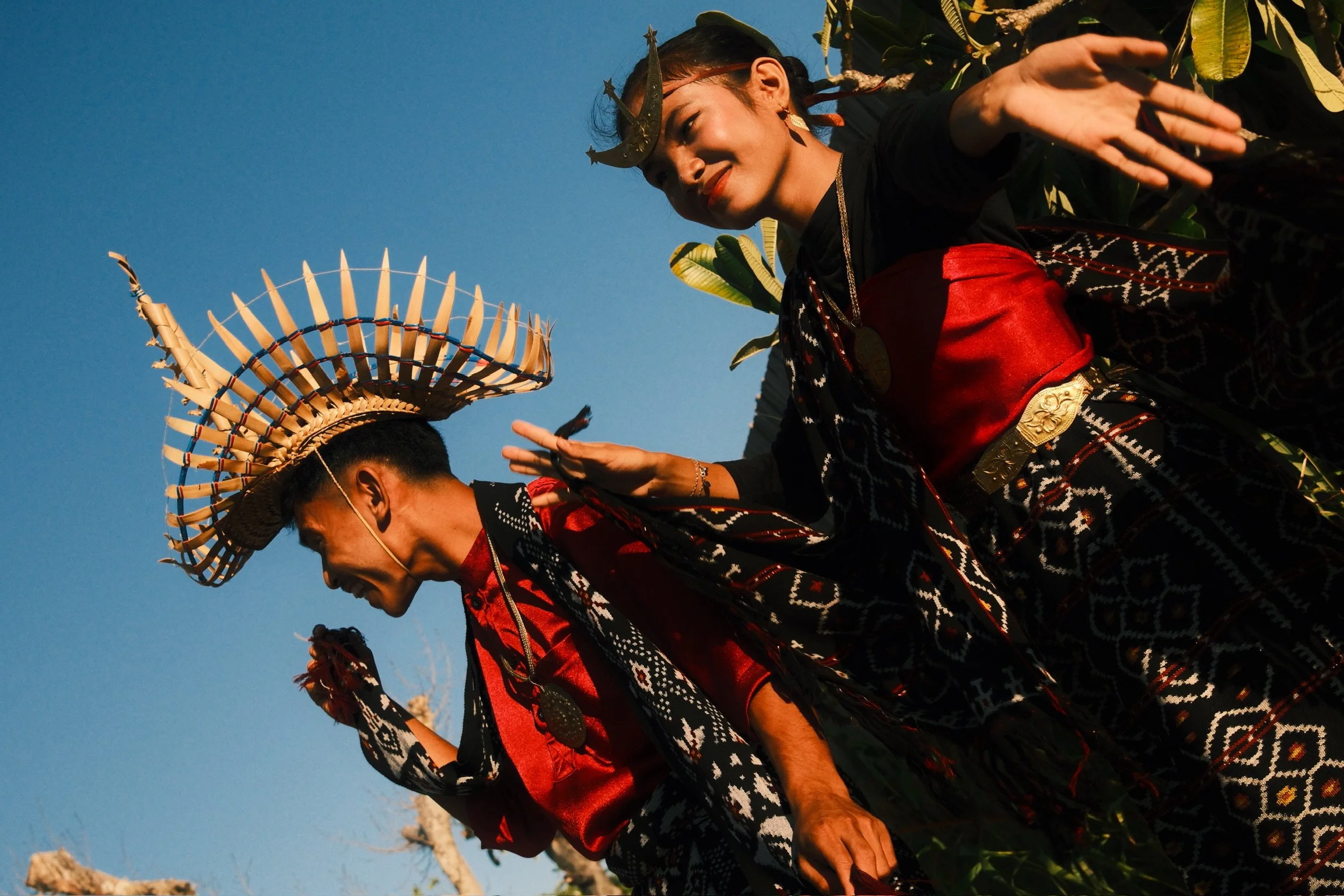
There is staying at a newly opened hotel, and then there is arriving while it is still becoming one.
In June 2026, we were among the first guests to stay at NIHI Rote, the long-awaited sister property to NIHI Sumba, on the remote Indonesian island of Rote. We arrived knowing that construction was ongoing, parts of the property were not yet complete and the team was still finding its rhythm ahead of the resort’s more formal opening later in the year.
Even with all of that in mind, the headline is simple: NIHI Rote is absolutely amazing.
It is less polished than NIHI Sumba, the landscaping needs time to mature and the service was understandably still evolving. Some of the resort was quite literally being finished around us. Yet there are very few hotels that have lodged themselves in our memory as quickly as this one did.
NIHI Rote already has the things that are hardest to create: a remarkable setting, a genuine sense of purpose and the feeling that you are experiencing something far beyond a beautiful room on a beach.
This is what it was really like to stay there, how to get to Rote and what we think you should know before booking.
Aerial view of NIHI Rote’s villas and swimming pools beside a white-sand beach and offshore reef.
What is NIHI Rote?
NIHI Rote sits on Bo’a Beach on the island of Rote, close to the southern edge of Indonesia. It is the second Indonesian resort from NIHI, the name behind the now-famous NIHI Sumba, which has spent decades evolving from a remote surf retreat into one of the country’s most recognised luxury hotels.
Rote is the next chapter, but it does not feel like an attempt to reproduce NIHI Sumba on a different island.
The resort has just 21 villas and duplex estates arranged along Bo’a Beach, with surfing, horses, nature and access to a largely undeveloped part of Indonesia central to the experience. While some of the ingredients will feel familiar to anyone who knows NIHI, Rote has its own identity.
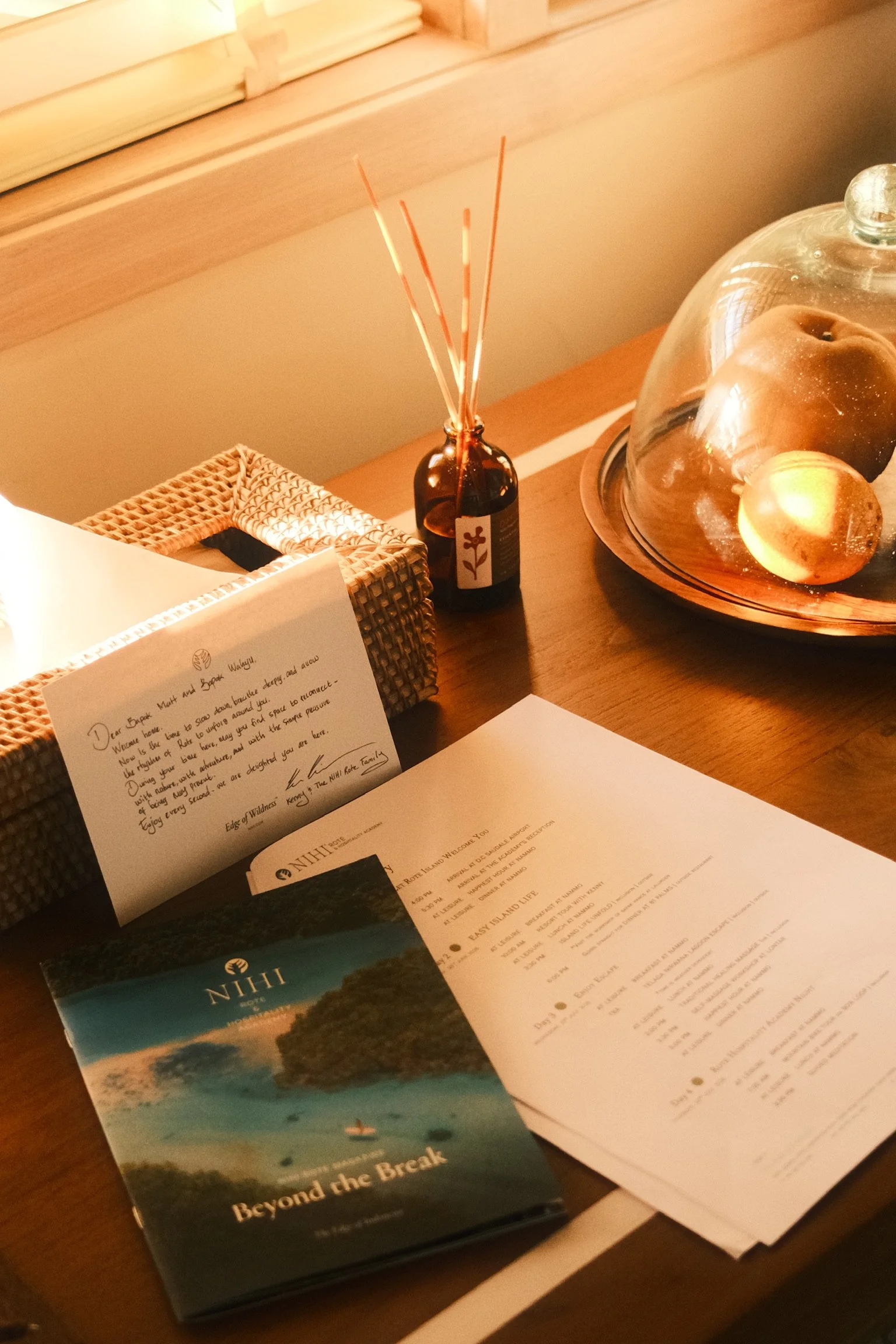
At the centre of that identity is the Rote Hospitality Academy. We had heard plenty about it before arriving and, perhaps slightly cynically, wondered how visible it would actually feel once we were at the resort. It quickly became clear that this was not simply a good story added to the website. The academy shapes the people, atmosphere and wider purpose of NIHI Rote.
First, you have to get to Rote
We should probably start with the reality that NIHI Rote is not especially easy to reach, although that is part of its appeal.
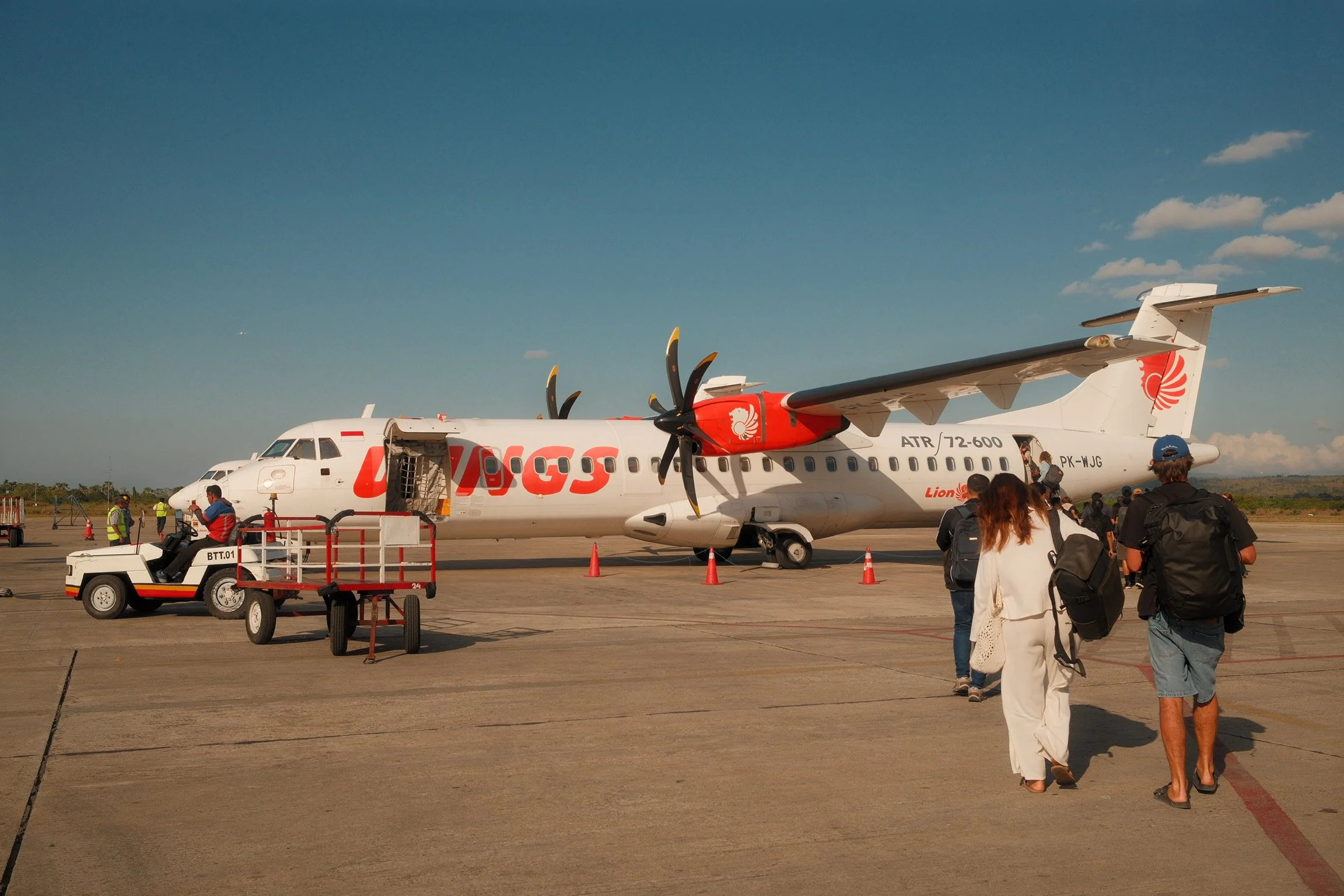
The journey takes you through Kupang in West Timor, which can be reached from Bali or connected with Sumba. From Kupang, there is then a short flight across to Rote. We flew out with Wings Air on an ATR and returned with Susi Air on a much smaller aircraft. The Susi Air flight was certainly more of an experience, although it only lasts around 25 minutes.
Anyone particularly nervous about small propeller planes may find the Wings Air option more comfortable, but either way, reaching Rote requires more thought than booking a direct flight and being at the pool by lunchtime.
Flights are limited and schedules may dictate the shape of your itinerary, which is why we would not recommend squeezing NIHI Rote into a hurried three-night gap between other hotels. The journey is not difficult in an expedition sense, but it asks you to slow down and accept that things work differently in this part of Indonesia.
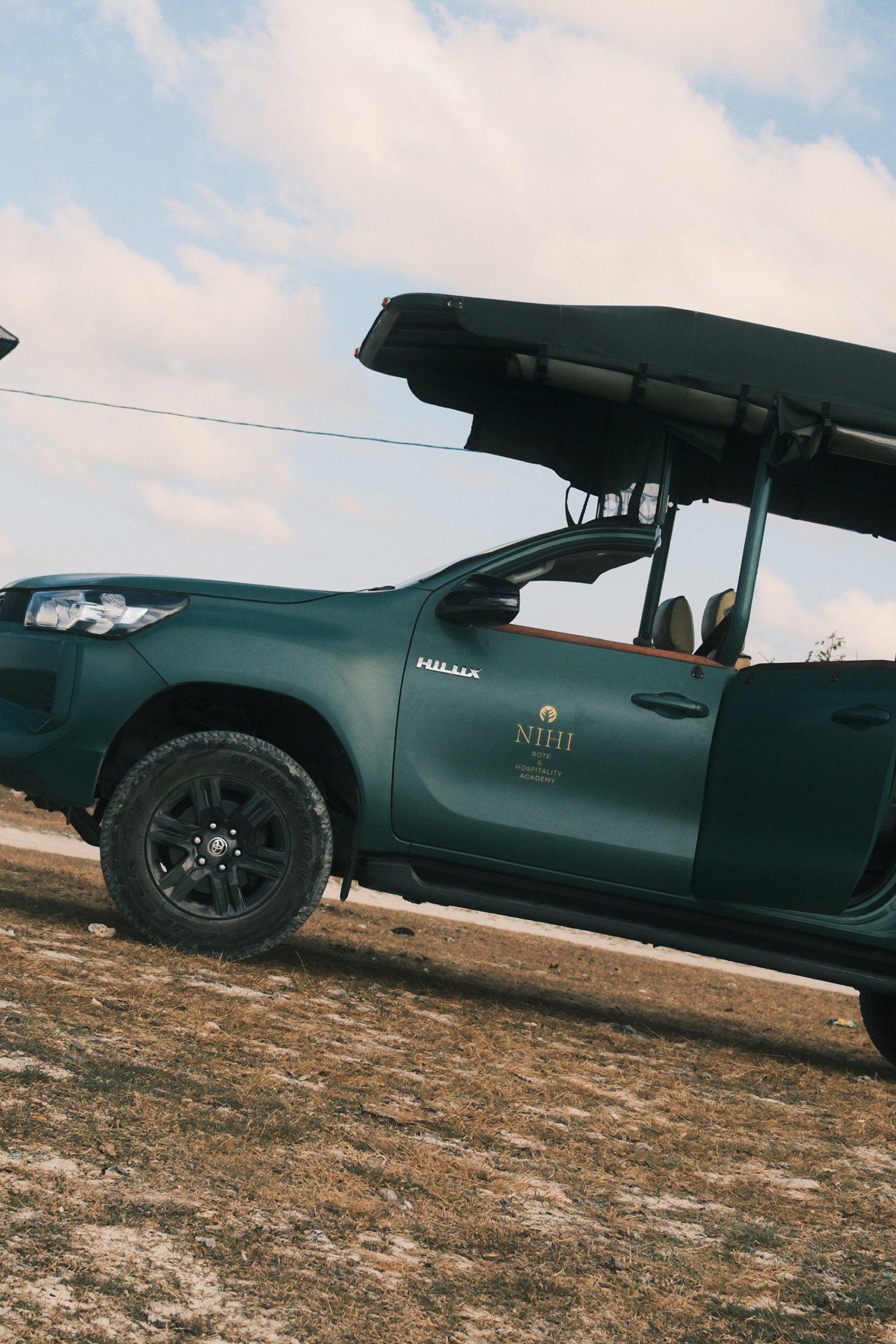
Once you land on Rote, the drive to the resort takes around one hour and 20 minutes. NIHI is introducing more of the safari-style vehicles familiar from NIHI Sumba, although only a small number were available during our stay.
The drive itself is a wonderful introduction to the island. You pass through small villages and see local life unfolding around you, without feeling as though you are moving through somewhere presented for tourists. Rote remains very low-key, with little large-scale development or tourism infrastructure, and after arriving from Bali, the contrast feels enormous.
Eventually, almost out of nowhere, you reach NIHI.
A resort that has quite literally been planted on the edge of Rote
The first thing to understand about NIHI Rote is just how new it is. This is not a resort that has been absorbed into mature gardens over many years. It has been placed on a huge stretch of relatively untouched coastline and, while an enormous amount of planting has already taken place, gardens cannot be rushed.
When we visited, Rote was very dry and much of the foliage around the resort was still young. In a few years, we can imagine the greenery surrounding the villas and softening the architecture, making the resort feel like a proper oasis.
For now, you can see that process happening.
You arrive from above, with the resort stretching laterally along Bo’a Beach below. Although there are only 21 villas, the property does not feel tiny or constrained. It remains intimate, but there is enough space between the different areas for it to feel like a complete resort rather than a small collection of rooms.
There was still visible construction during our stay, particularly around the main pool and restaurant areas. We experienced most of the resort from Nammo Beach Club, while the central facilities were still being completed. There was occasional noise, although we had arrived knowing that this would be part of an early stay and expect the atmosphere to feel quite different once those areas are open.
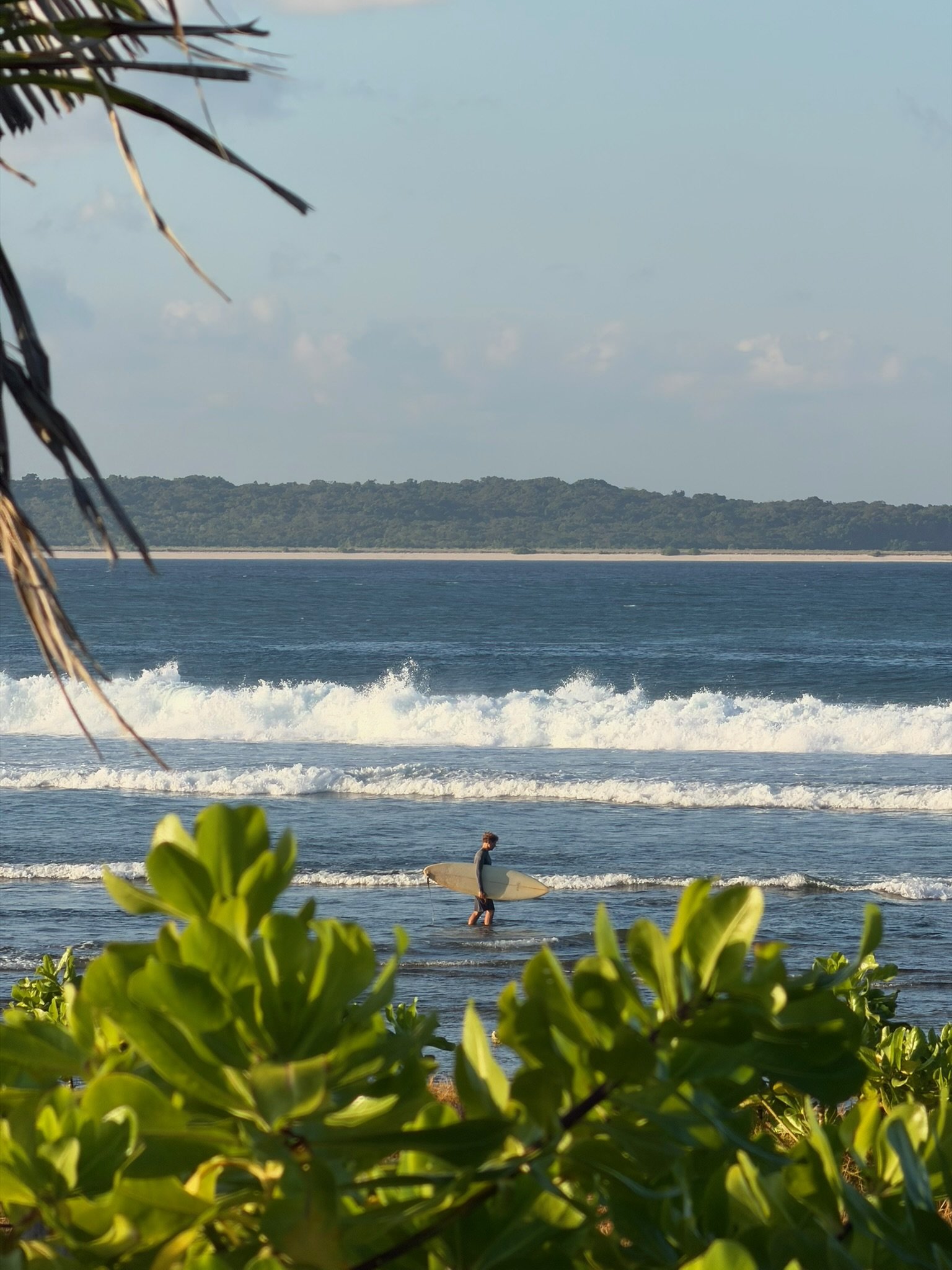
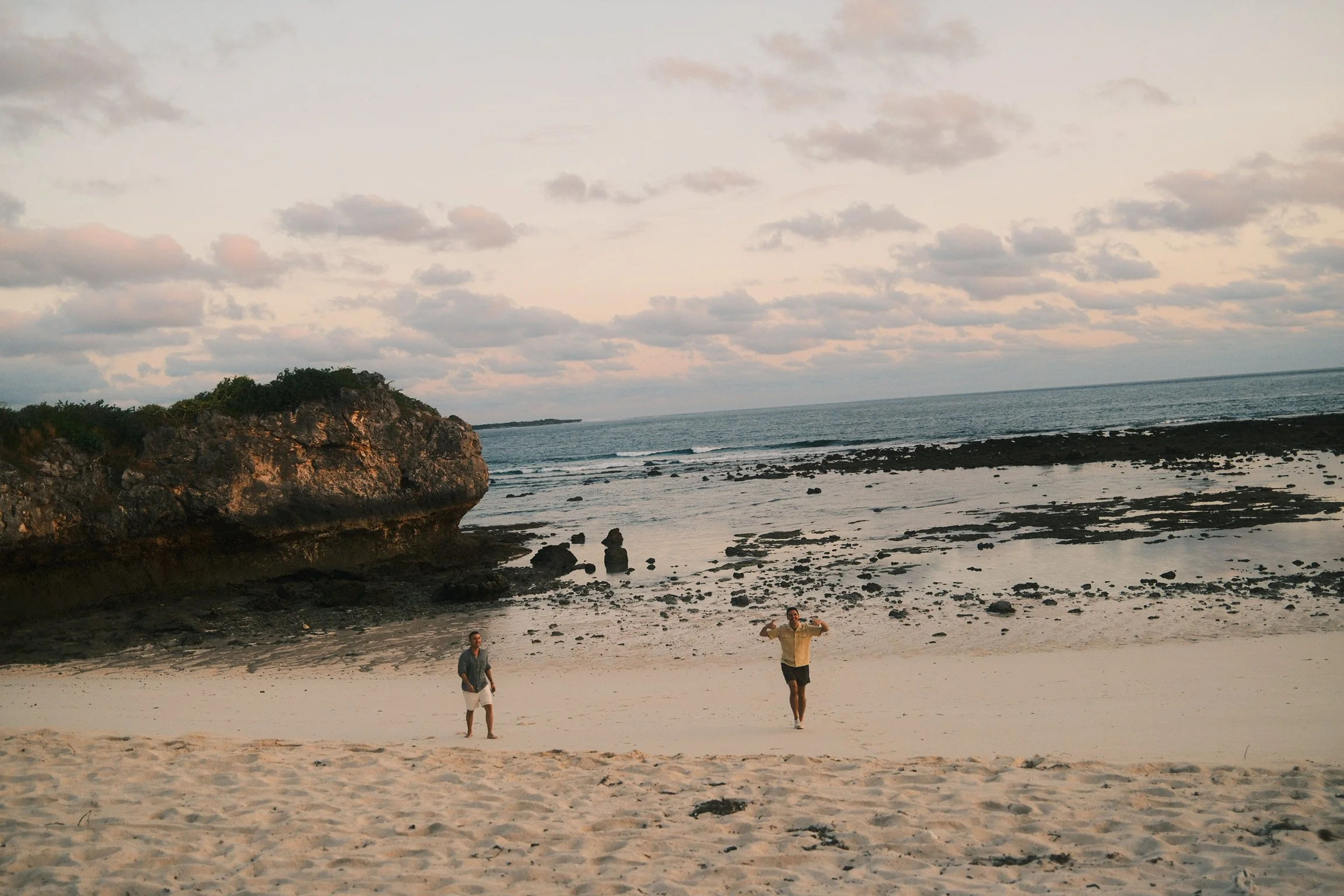
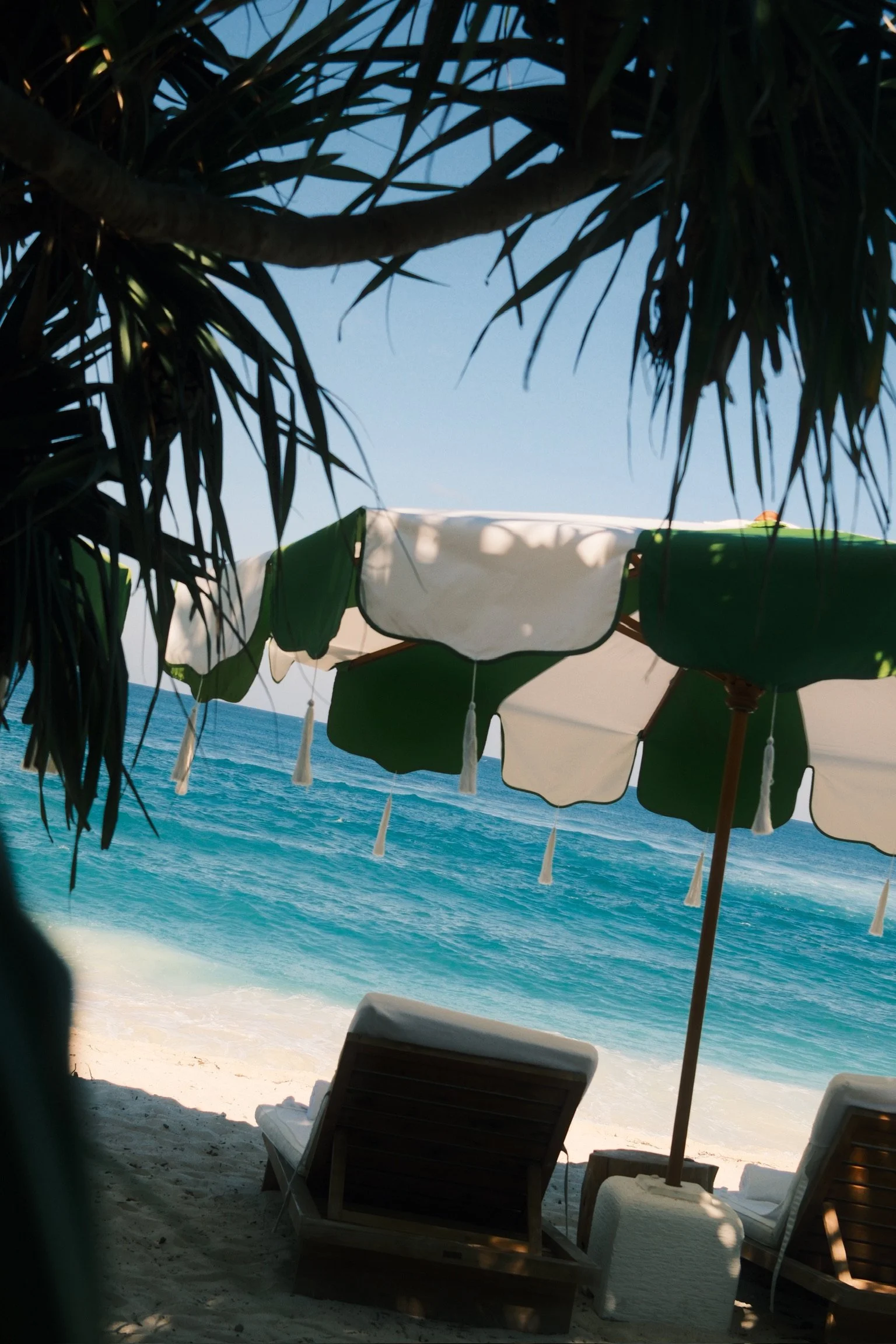
Even with the unfinished elements, the beach immediately took over. Bo’a Beach is the reason the resort makes sense, and much of NIHI Rote’s personality begins with the relationship between the villas, the waves and that huge expanse of coastline.
Our Ume Bo'a Beach villa
We stayed in an Ume Bo’a Beach villa and, for us, the beachfront villas are where the full idea of NIHI Rote comes together.
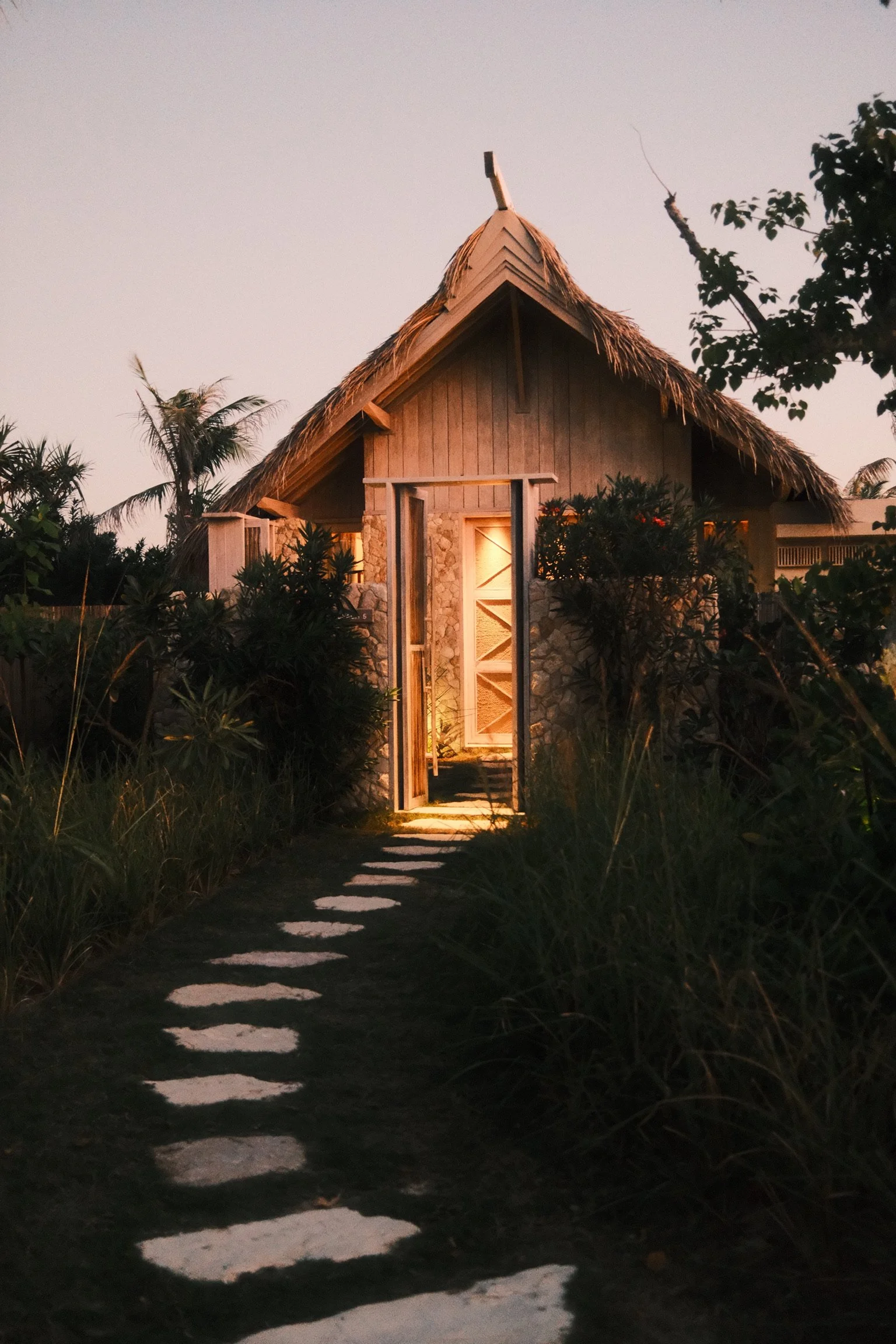
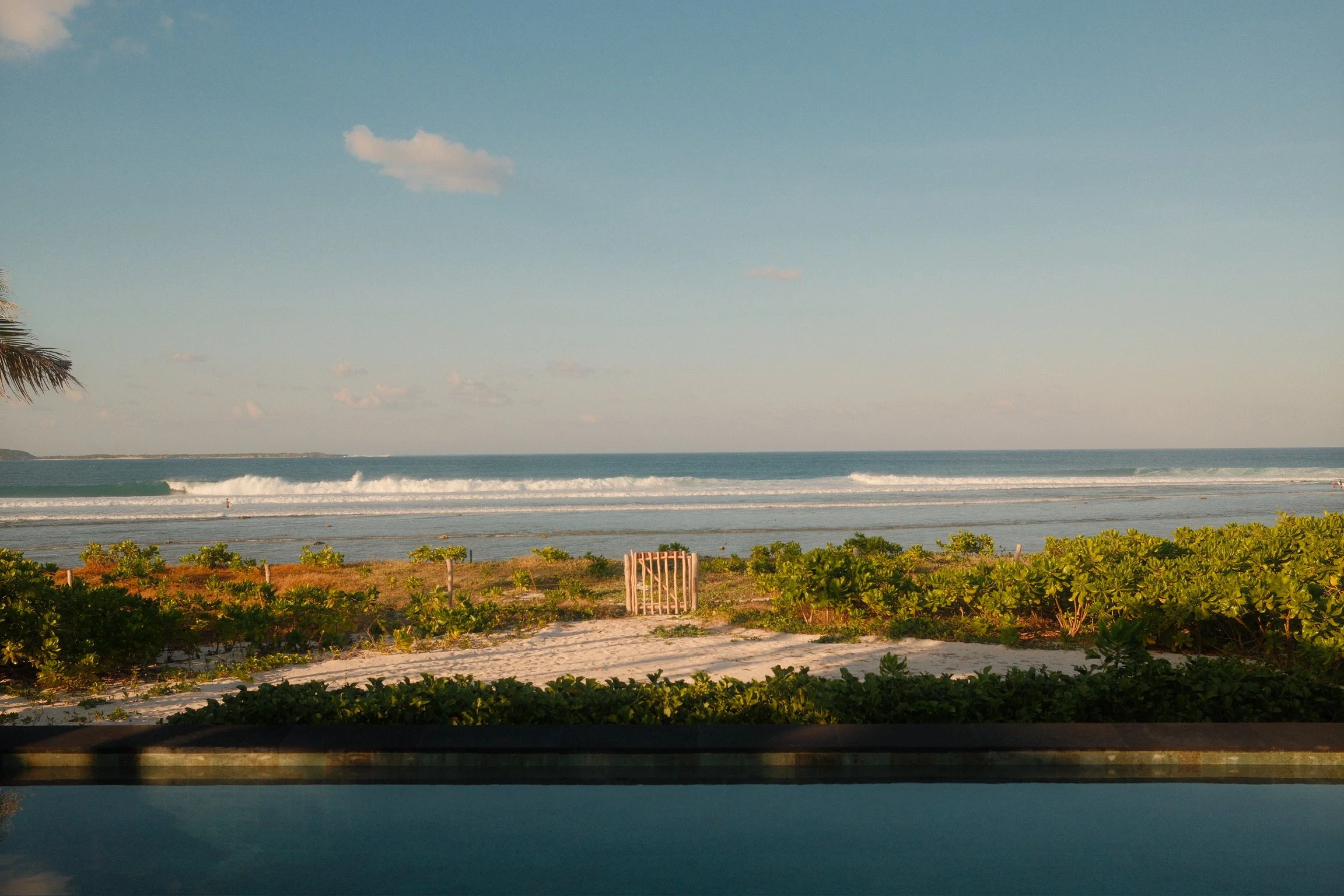
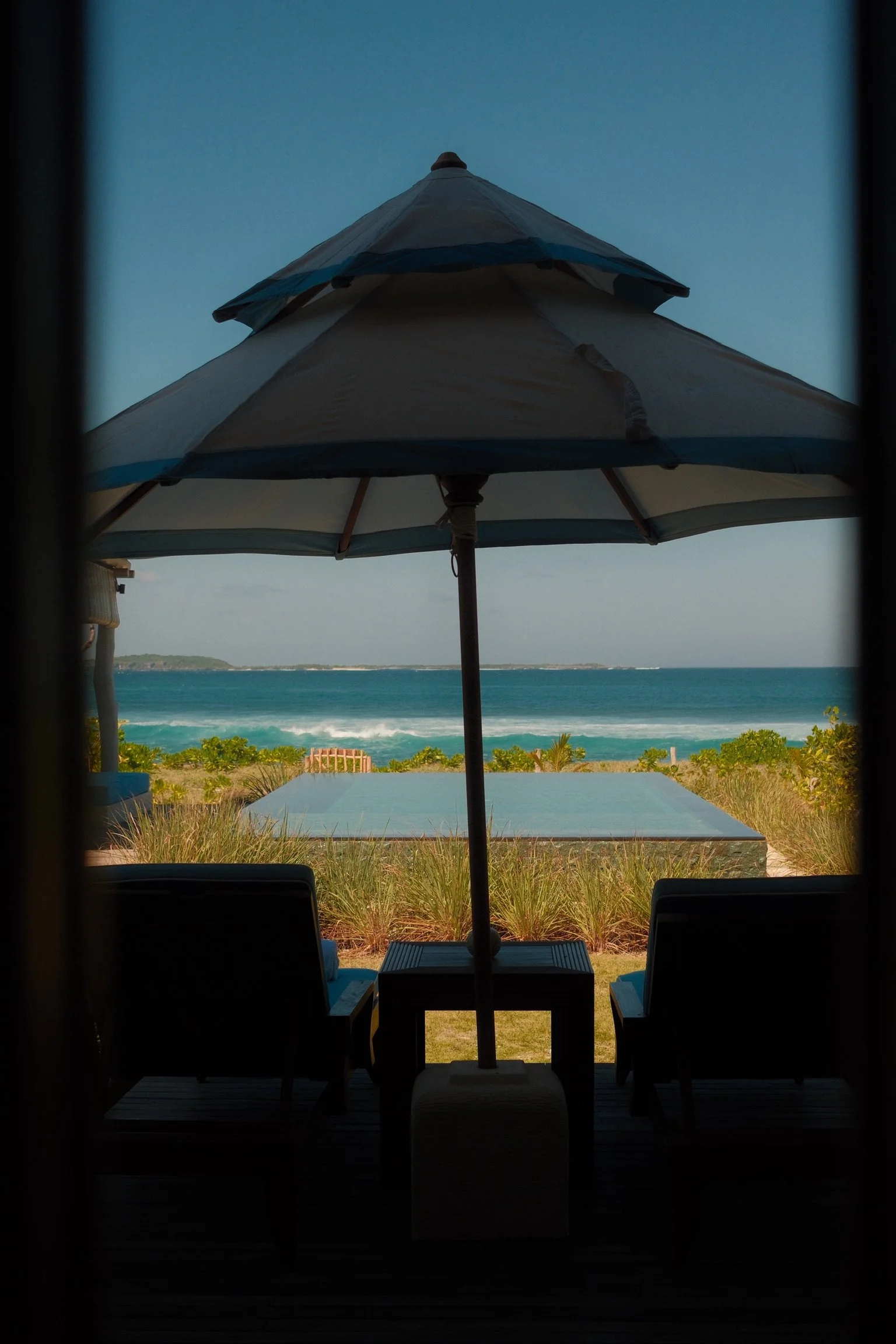
It is difficult to communicate the scale of the private outdoor space in a photograph. The villa sits within an enormous garden, with an elevated swimming pool, a covered lounge bale, outdoor dining and a very wide stretch of ocean frontage. From the garden, you can walk directly onto Bo’a Beach.
The view is one we know we will never forget.
We have stayed at many island resorts around Asia, but there was something extraordinary about sitting in the villa and watching the swell roll towards Bo’a Barrel. Surfers would appear in the distance, cutting through the waves and occasionally doing things that looked completely impossible from the safety of our pool.
A closer look at NIHI Rote’s Ume B’oa Beach Villa, with its private pool, garden and direct access to the beach.
“We have stayed in a lot of island resorts across Asia, and this is one of those views we know we will never forget.”
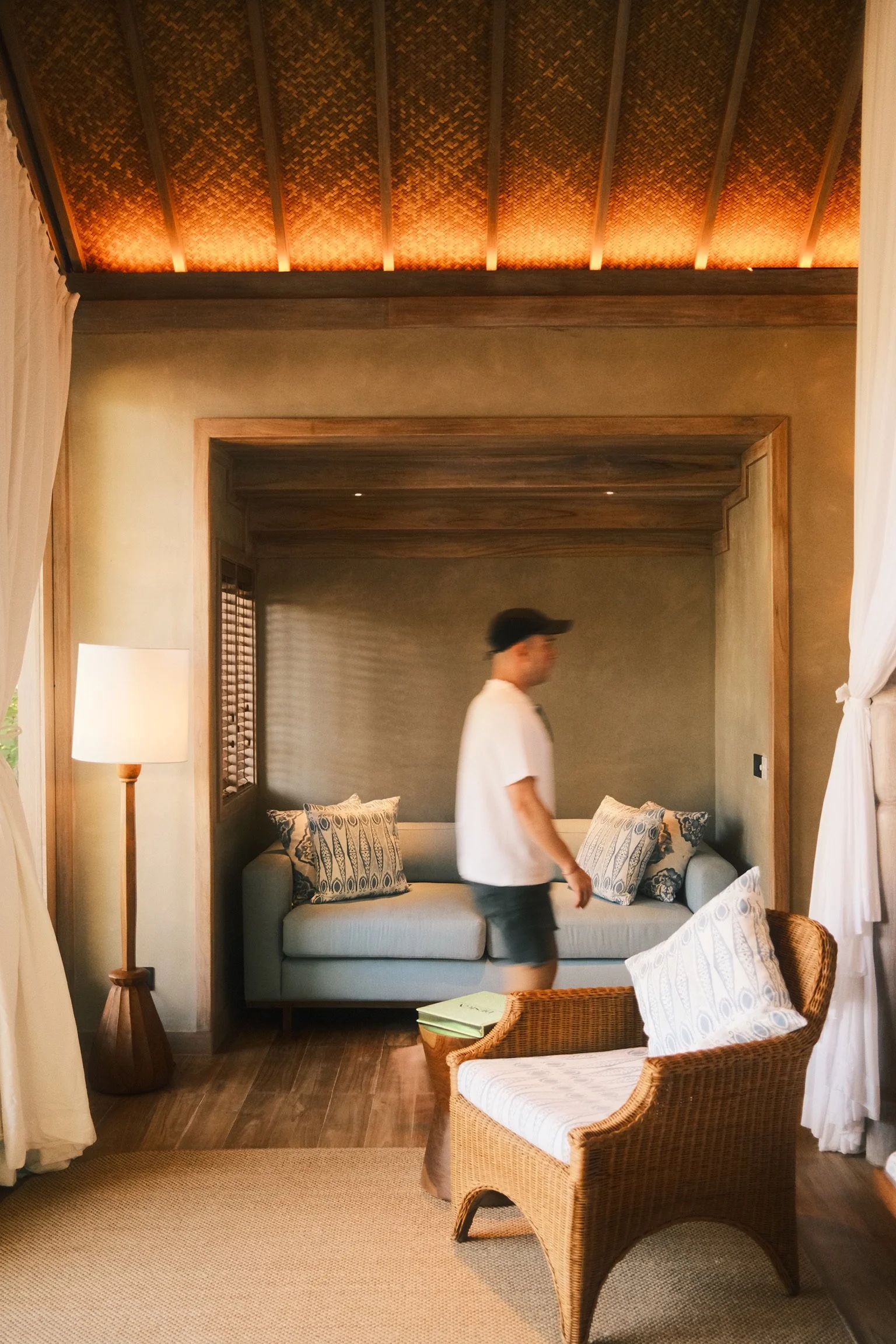
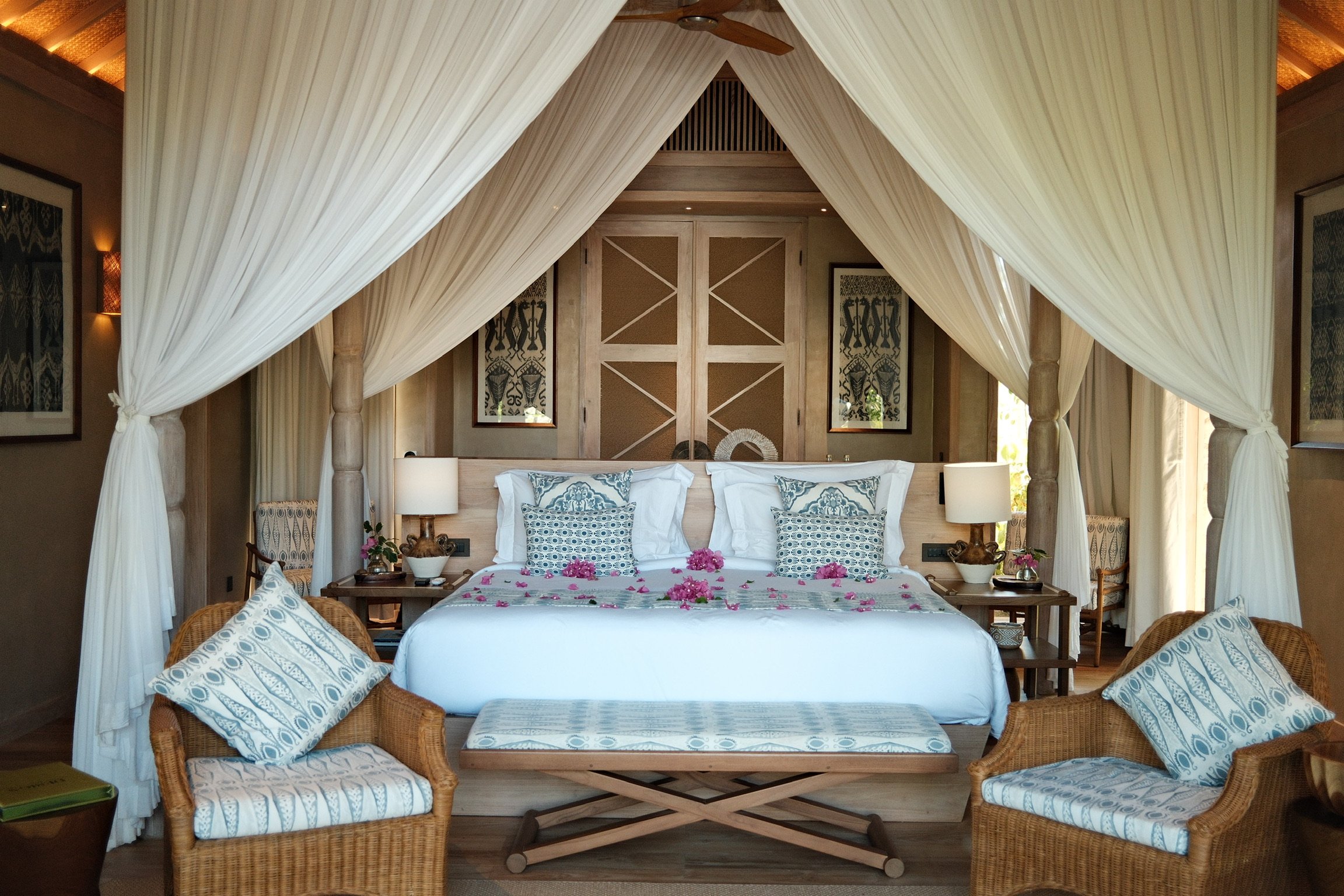
Inside, the design is more restrained than the outdoor setting. A huge pitched ceiling gives the bedroom a real sense of drama above the four-poster bed, while the muted colour palette and Rotenese textiles keep the room connected to its location without overdoing it.
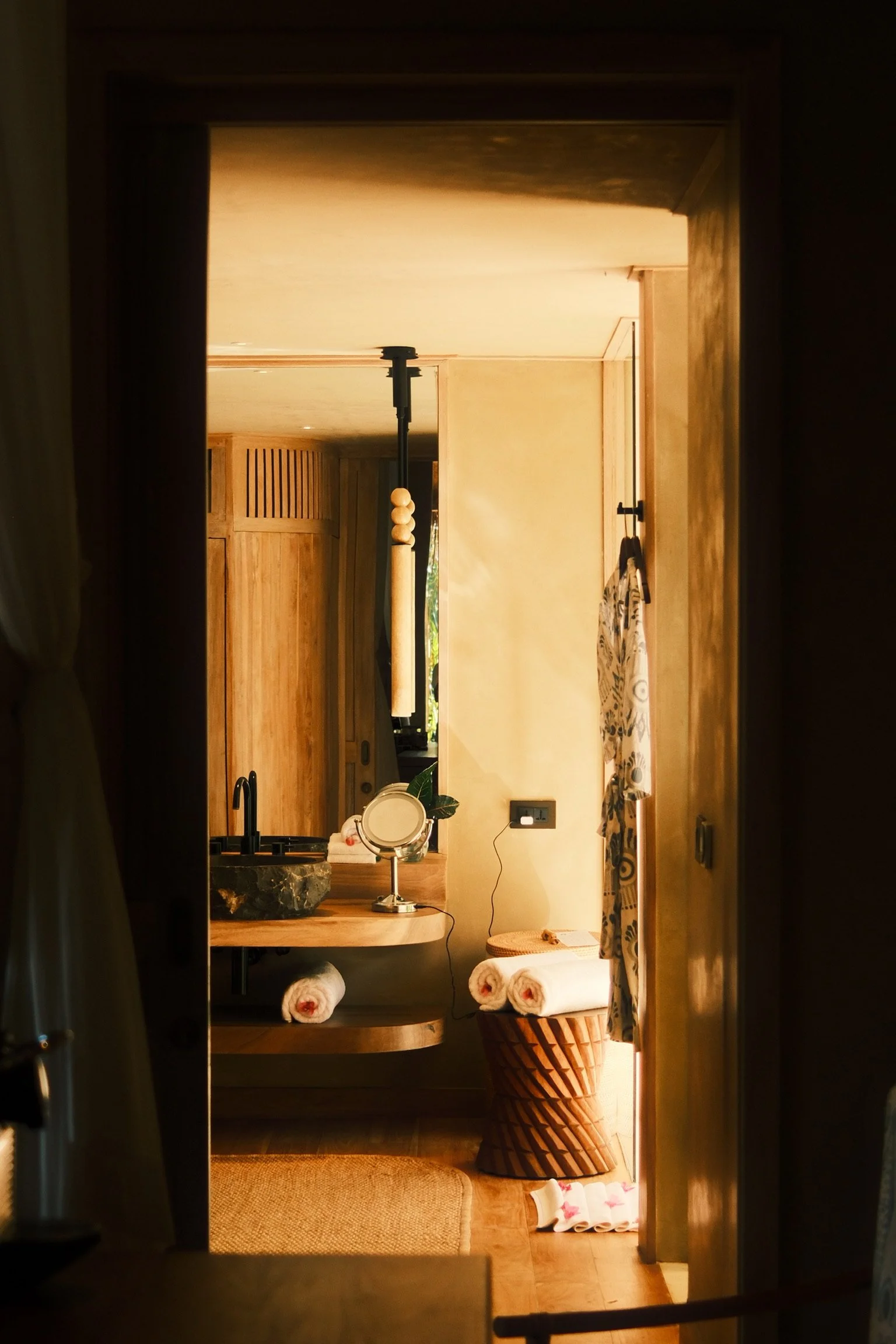
At this price point, there are a few things we could question. The internal bedroom is not enormous by contemporary ultra-luxury standards, and the bathroom feels relatively compact. There is an outdoor bath and shower, but this is not a villa where the proposition is based on having endless indoor space.
Most of the scale and drama has deliberately been placed outside. Once you are standing in the garden, looking across the pool towards the ocean, that decision becomes much easier to understand. The real luxury is the land, privacy, view and feeling of having such a large piece of the coastline to yourself.
NIHI also offers more affordable garden villas in both single-storey and duplex configurations. We viewed some during our stay and would think carefully about the duplex option if privacy is important. From the elevated upstairs bedrooms, there can be sightlines towards neighbouring villas and gardens.
The garden villas still provide access to the entire resort, but for us, NIHI Rote is fundamentally about Bo’a Beach. Given the choice, we would stay on the beachfront again.
The Hospitality Academy is the heart of NIHI Rote
Before arriving, we were interested in the story of the Rote Hospitality Academy, but also conscious that luxury hotels have become very good at talking about purpose.
Sometimes the language is compelling, but the purpose itself feels distant from the guest experience.
That is not what is happening at NIHI Rote.
Rote has very limited tourism and, if NIHI wanted to create a resort capable of delivering hospitality at this level, it needed to develop the people and skills required to operate it. The academy was created to train young Rotenese students and give them opportunities that may lead to careers at NIHI, elsewhere in Indonesia or further afield.
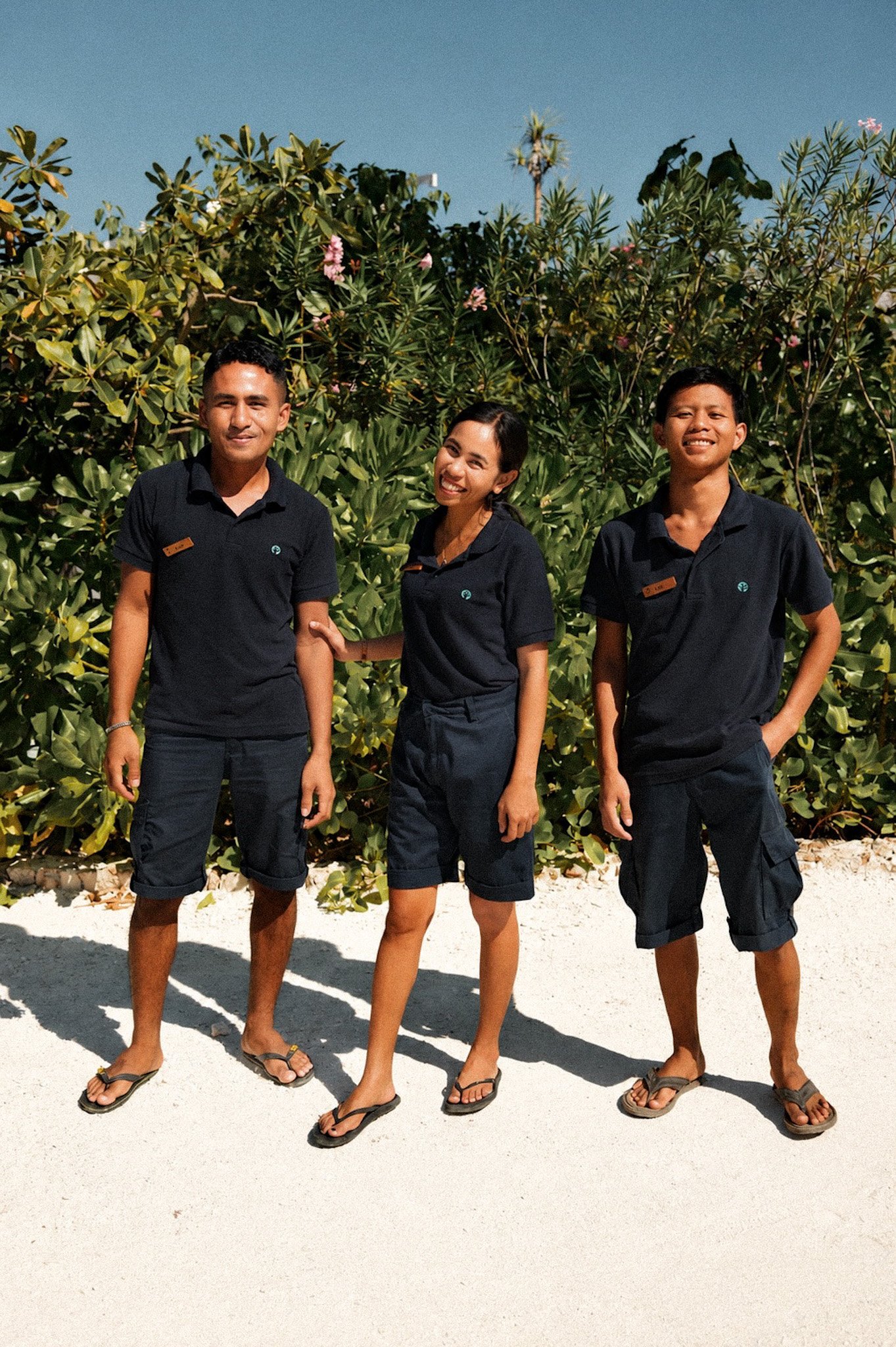
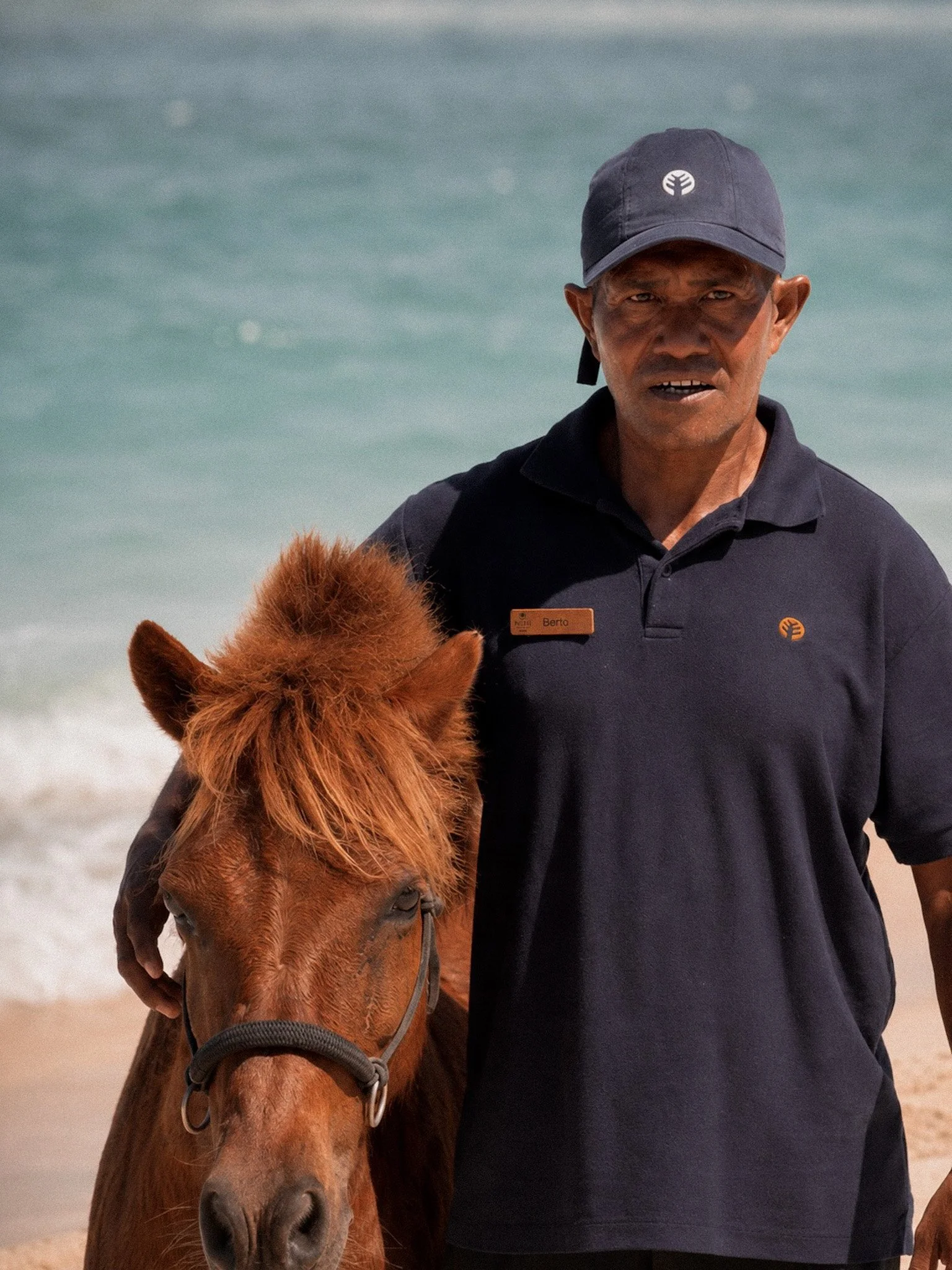
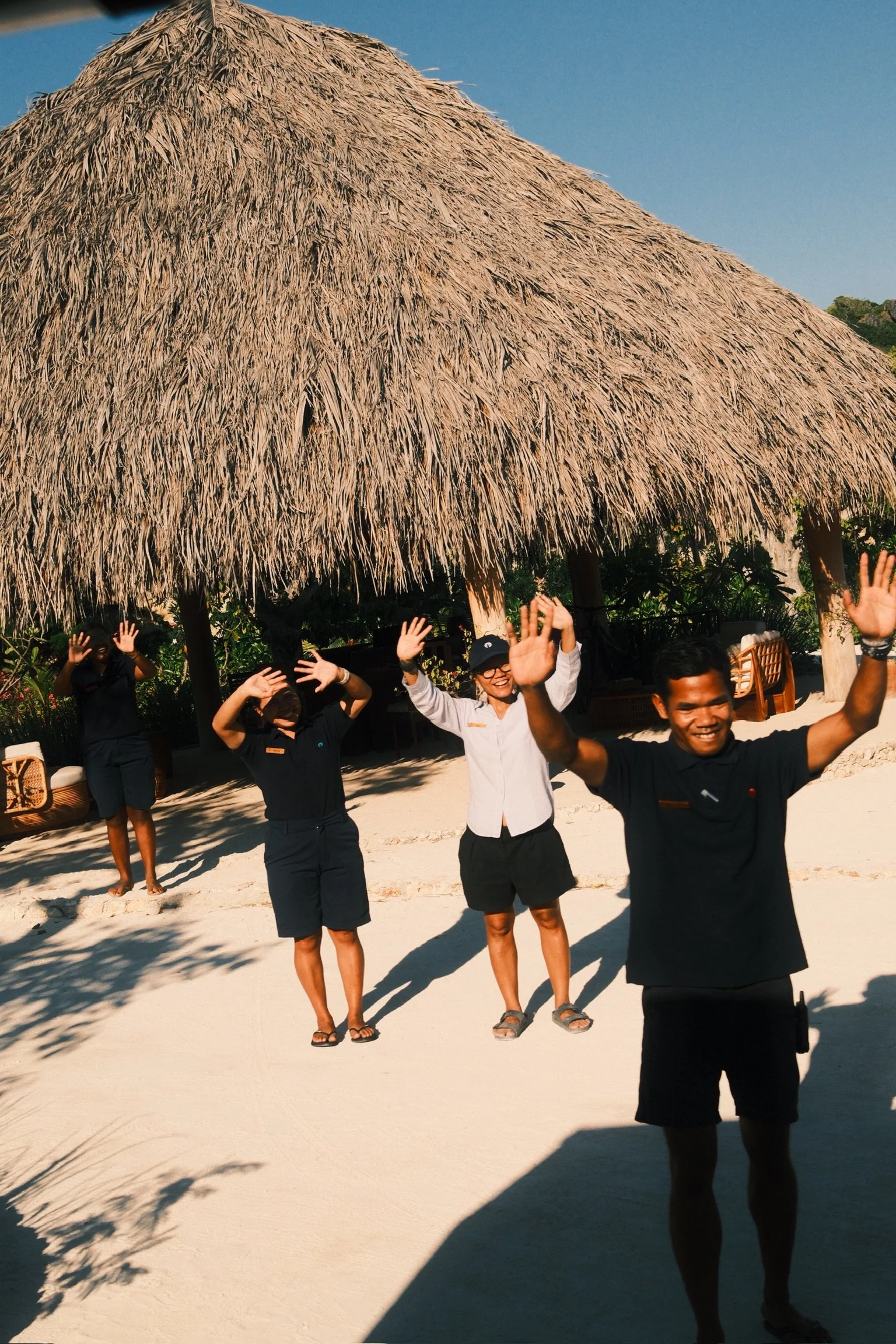
What makes the idea so powerful is that the academy does not feel detached from the hotel. The students, graduates and local team are woven into the experience of staying there.
NIHI often talks about wanting the Rotenese to host guests on their own island, and that is exactly how our stay felt.
The service was not perfect, and it would be dishonest to present it that way. The team is young, some interactions are naturally less polished and there were moments when we could feel people still learning the confidence required at this level of hospitality.
However, the staff were incredibly endearing. There was warmth, pride and openness that made us want to engage with them rather than judge every interaction against a technical luxury-hotel checklist.
We often talk about the difference between being served and being hosted. NIHI Rote became one of the clearest examples we have experienced of why those two things are not always the same.
Technical polish will develop with time. Genuine warmth is much harder to manufacture.
An evening with the Hospitality Academy
At least once a week, NIHI hosts an evening centred around the Hospitality Academy, and it became one of the most memorable parts of our stay.
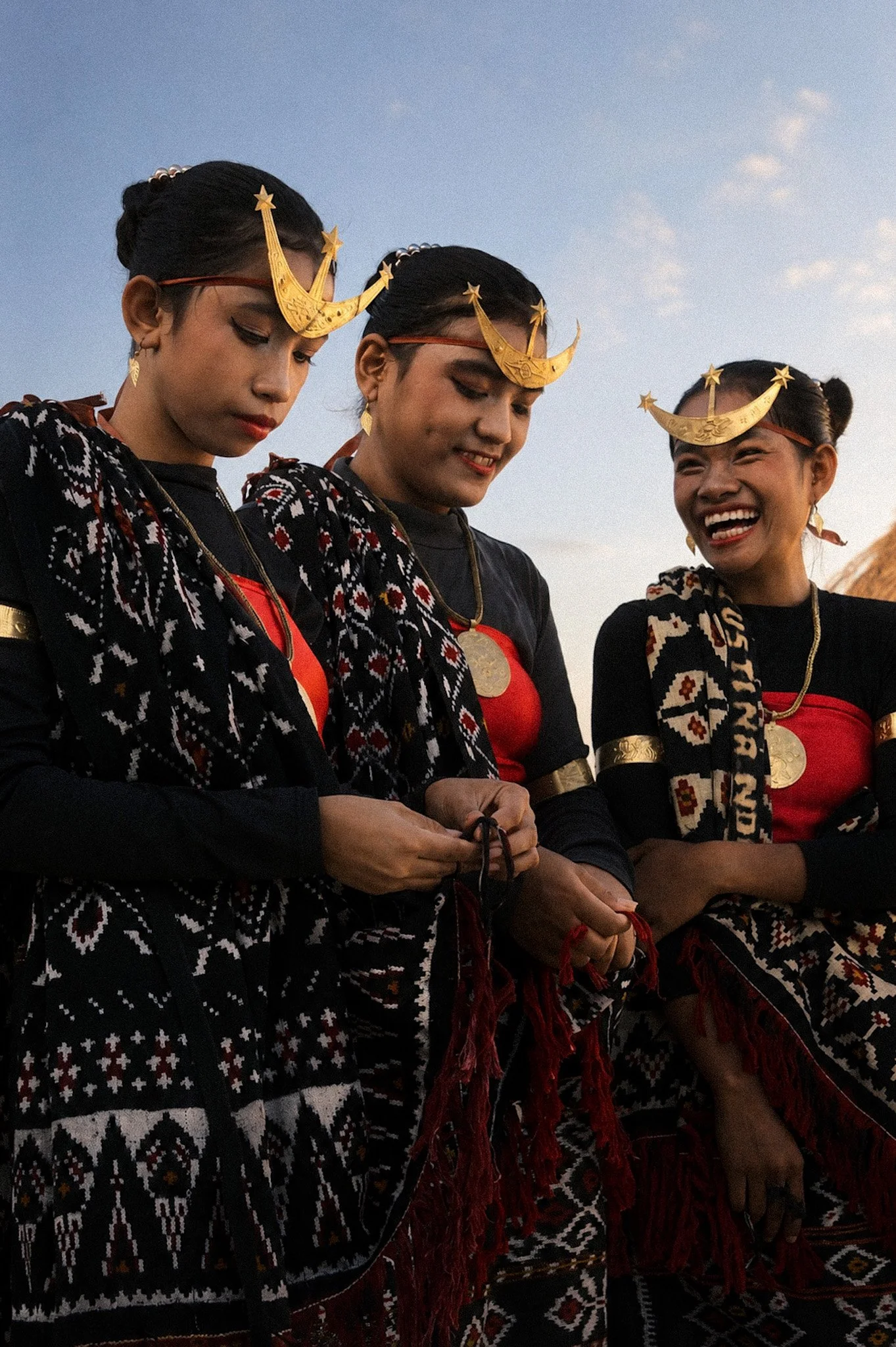
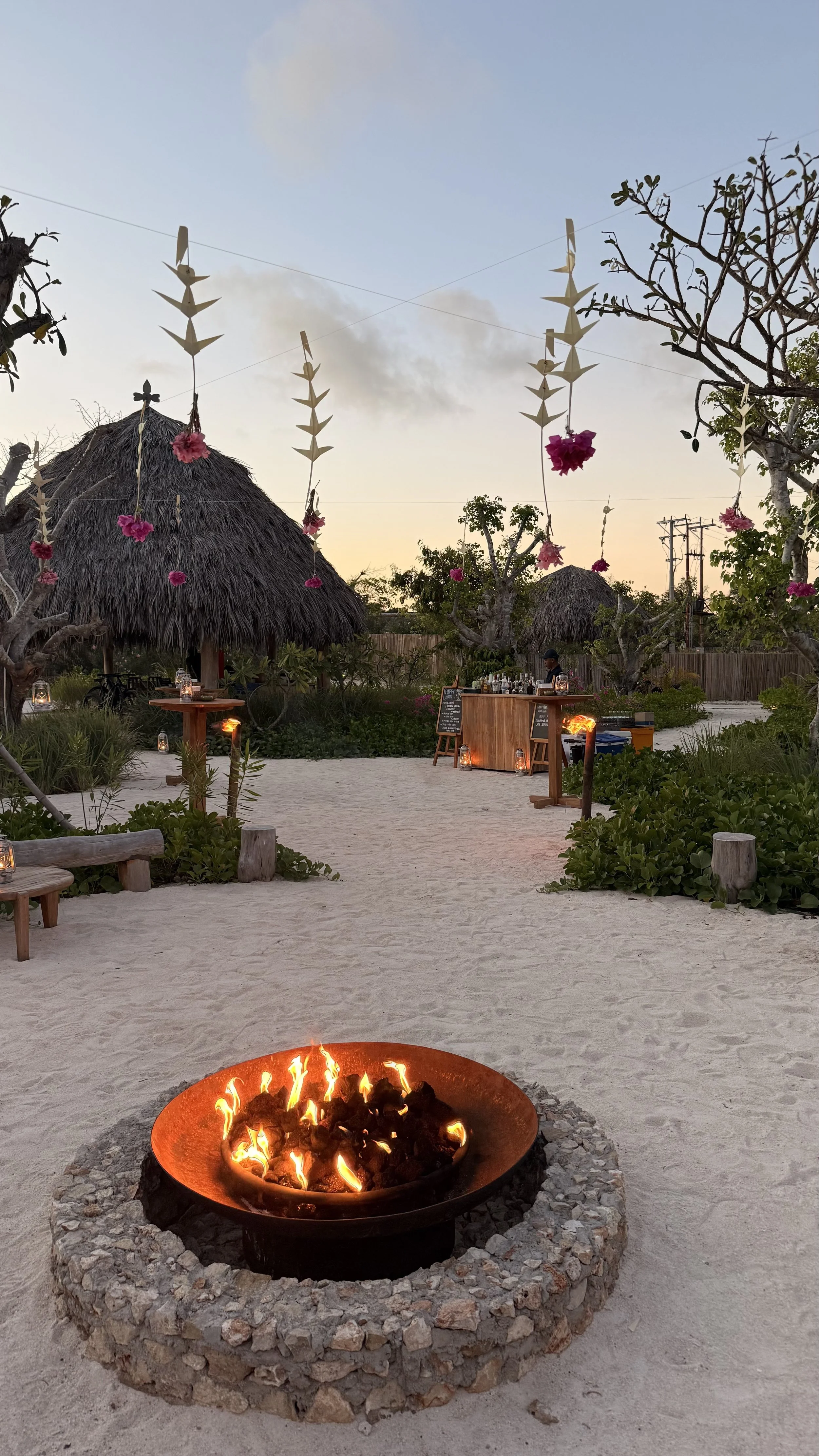
We began with drinks at sunset before hearing from some of the academy’s newest students, who shared their stories and spoke about what the opportunity meant to them. The evening continued with music and dancing before everyone sat down for dinner together.
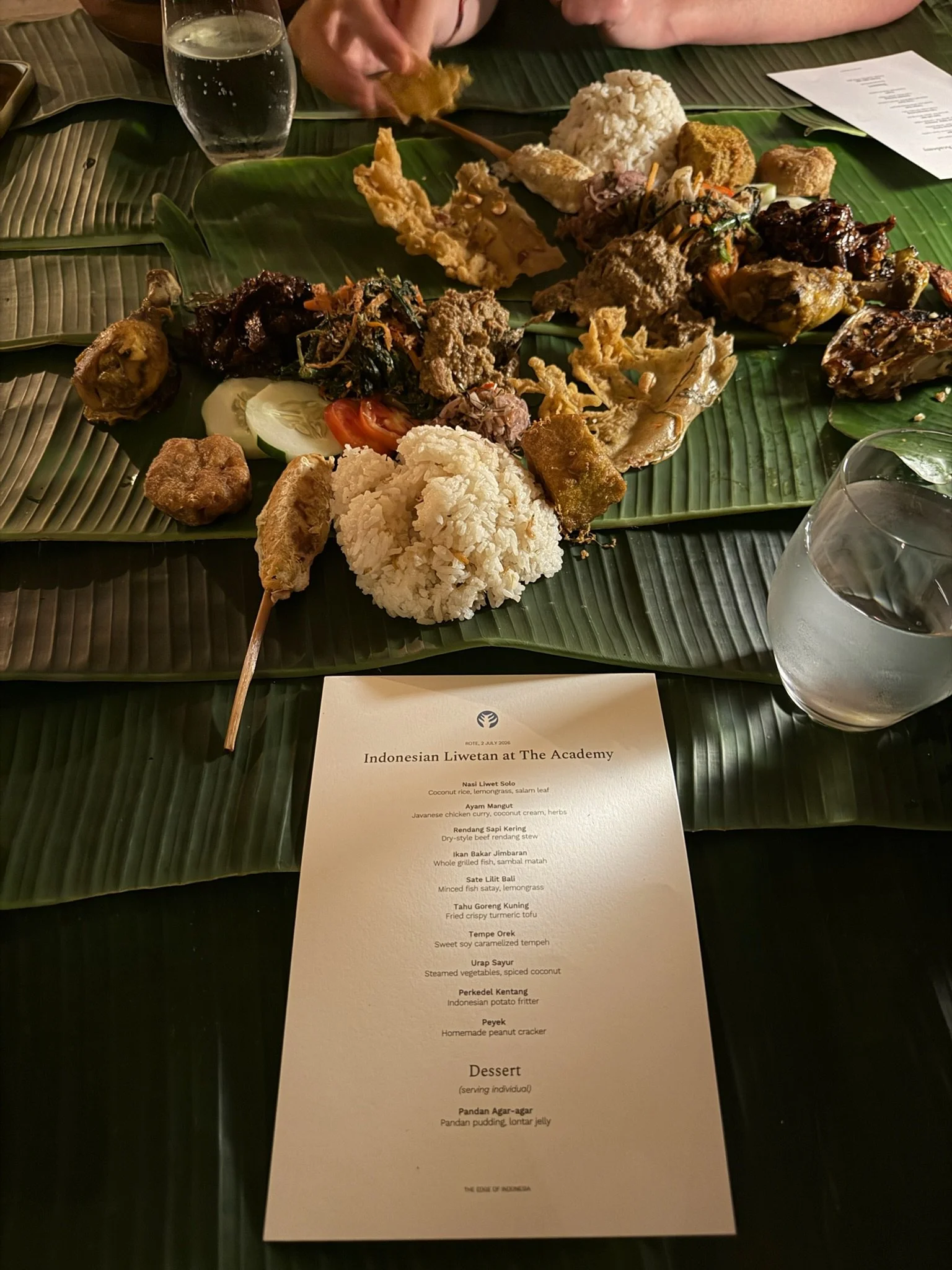
The Rotenese meal was served on banana leaves along one long communal table, with students, hotel guests, local people and members of NIHI’s senior team eating family style.
It would have been easy for an evening like this to feel staged. Instead, it felt like a natural extension of what the resort is trying to become.
The experience helped us understand that the academy is not simply a project positioned behind the hotel. It is part of NIHI Rote’s identity and a much larger conversation about the future of tourism on the island.
Rote currently has very little tourism, and many of the people being trained through the academy may eventually become those who shape its hospitality industry. Sitting around that table, hearing their stories and seeing the pride surrounding the programme made the importance of it feel much more tangible.
It was one of those evenings that stayed with us long after the food had been cleared away.
What is the food like at NIHI Rote?
NIHI Rote operates on a full-board basis, with breakfast, lunch, dinner and non-alcoholic drinks included in the stay.
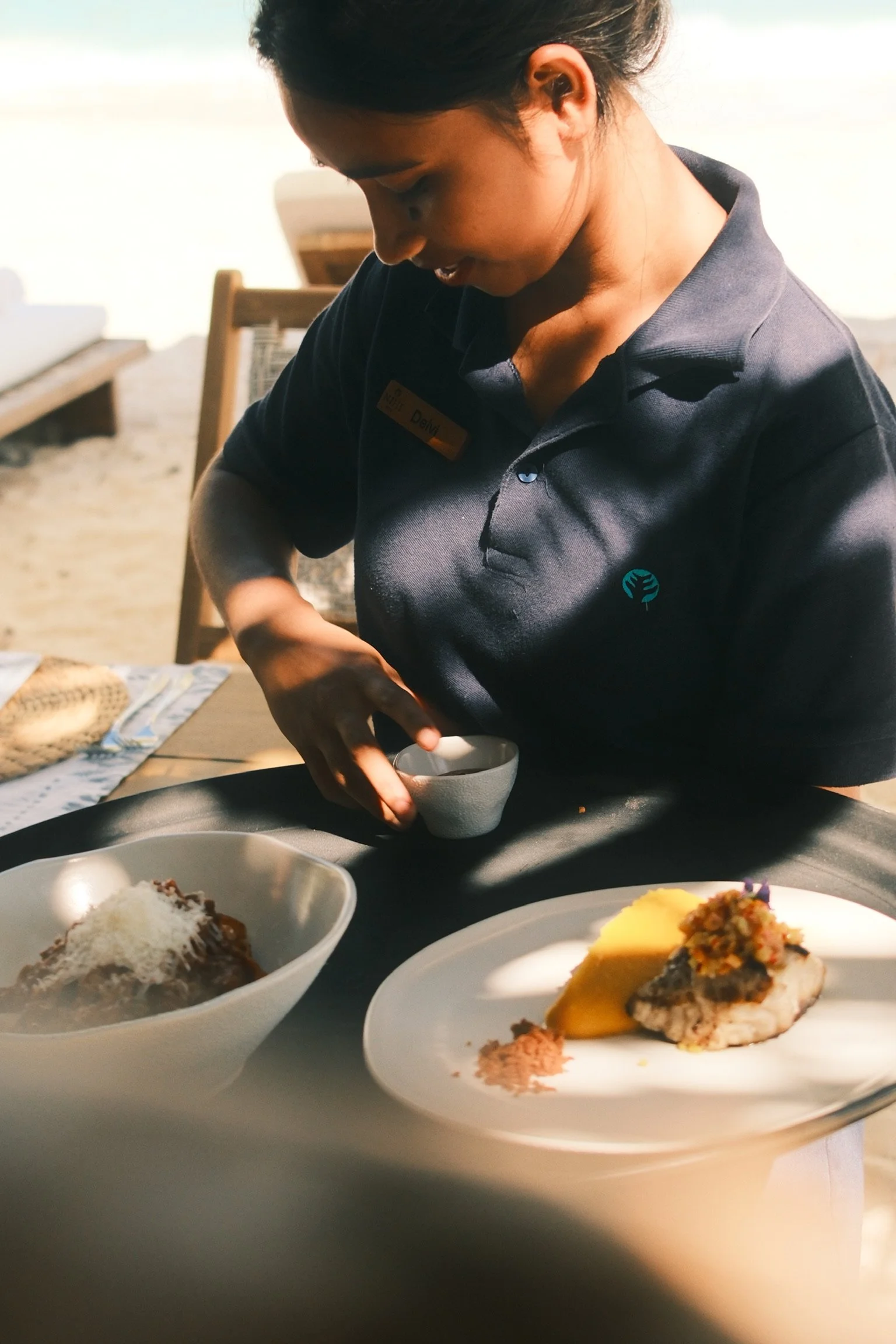
During our visit, most dining took place around Nammo Beach Club while the remaining restaurant areas were still being completed. Despite the limited number of venues operating, the quality of the food was consistently lovely.
The menus moved between Indonesian dishes, Mediterranean influences and familiar international options, giving us enough variety without the food feeling disconnected from its setting. Breakfast was entirely à la carte and, overall, the quality felt exactly where it needed to be.
The Rotenese dinner during the Hospitality Academy evening was the standout, although that had as much to do with the people and atmosphere as any individual dish. Eating together from banana leaves along the communal table created a stronger memory than a formal tasting menu probably would have done.
There is also a proper bar at Nammo Beach Club, although alcohol is not included in the full-board rate and can become expensive quickly. A glass of wine was around £20 during our stay, so a few drinks with lunch followed by sundowners can make a noticeable difference to the final bill.
Rote may feel far removed from London, but the wine prices occasionally brought us straight back.
Bo'a Beach, surfing and the ocean
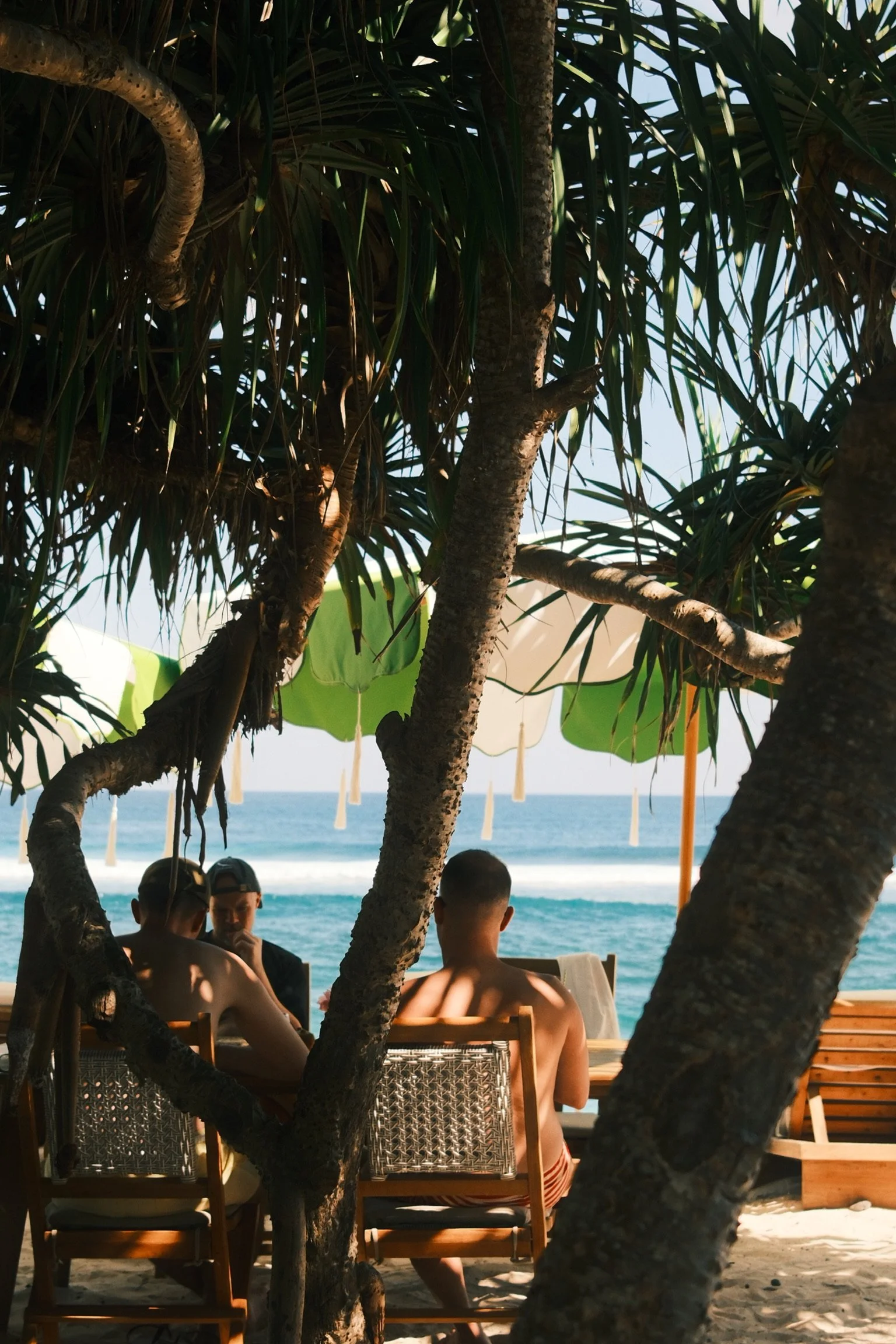
The beach, horses and surfing have always been central to the world of NIHI, and at NIHI Rote, surfing is impossible to ignore.
The resort sits directly in front of Bo’a Barrel, and from our villa we could watch the swell building and surfers heading out towards some seriously impressive waves. Even as non-surfers, there was something hypnotic about it.
This is not a break where we would suggest a complete beginner simply picks up a board and paddles out. The main waves are better suited to intermediate and advanced surfers, although the NIHI team can arrange opportunities elsewhere for people who want to learn or surf in less demanding conditions.
During our stay, the sea was particularly rough and unusually tidal, so swimming conditions directly in front of the resort were not at their best. That did not stop us enjoying the beach, which remains beautiful for walking, watching the waves and spending time around Nammo Beach Club.
There are sandflies, as there often are on remote beaches in this part of the world, so repellent is worth keeping close.
Around the beach club, guests can also use a Jacuzzi pool and cold plunge. The larger main pool was still being finished when we visited, so we did not experience the resort with all its central facilities open.
Surfing at B’oa Beach, where long reef breaks unfold just offshore from NIHI Rote.
What is there to do at NIHI Rote if you don't surf?
One of the things we loved most about NIHI Rote was how easy it would have been to spend the entire stay inside the villa, yet how much there was to experience once we left it.
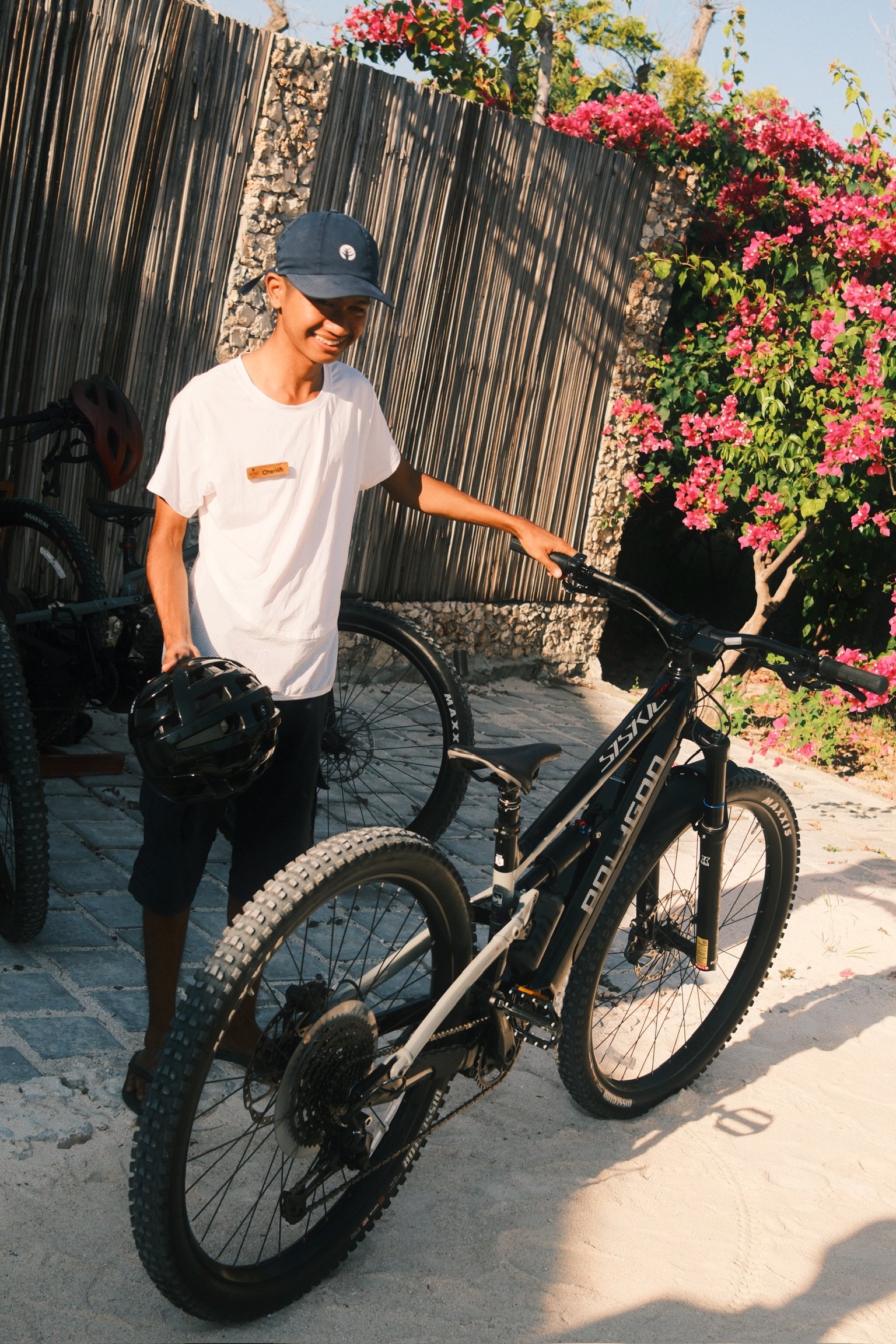
Cherish was our guide for many of our excursions, taking us paddleboarding, snorkelling, mountain biking and into different parts of the island. Those days became a huge part of why the stay felt so memorable.
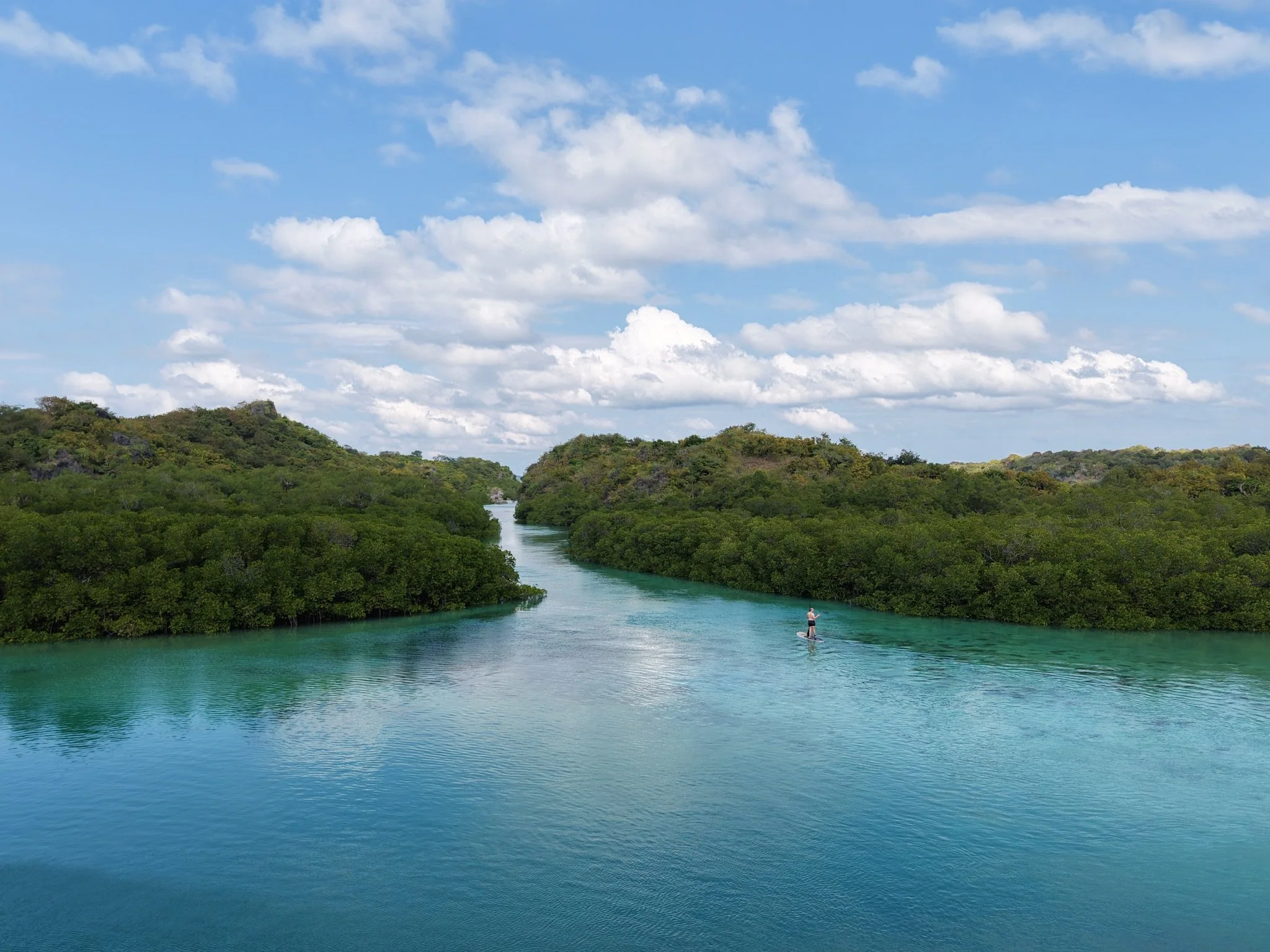
One of our favourite trips was to Telaga Nirwana, around a 45-minute drive from the resort. From there, we headed out onto the water and paddled through mangroves towards impossibly clear lagoons, with an extraordinary amount of space around us and almost nobody else there.
The paddleboarding and kayaking were absolutely beautiful. There was something incredibly peaceful about moving slowly through the water, surrounded by mangroves and open landscapes, without the noise that now accompanies so many well-known places across Southeast Asia.
We also went snorkelling. Judged purely on the reef, it was not the most remarkable snorkelling we have experienced in Indonesia. However, focusing only on the coral would miss what made the day special.
We were out on a boat with the NIHI team, moving through exceptionally clear water with virtually no other tourists around. The pleasure came from the space, the company and the feeling of being somewhere that had not yet been organised around tourism.
Sometimes an experience becomes memorable for reasons that have little to do with the original checklist.
E-bikes, empty beaches and a side of Rote we did not expect
Mountain biking was another standout.
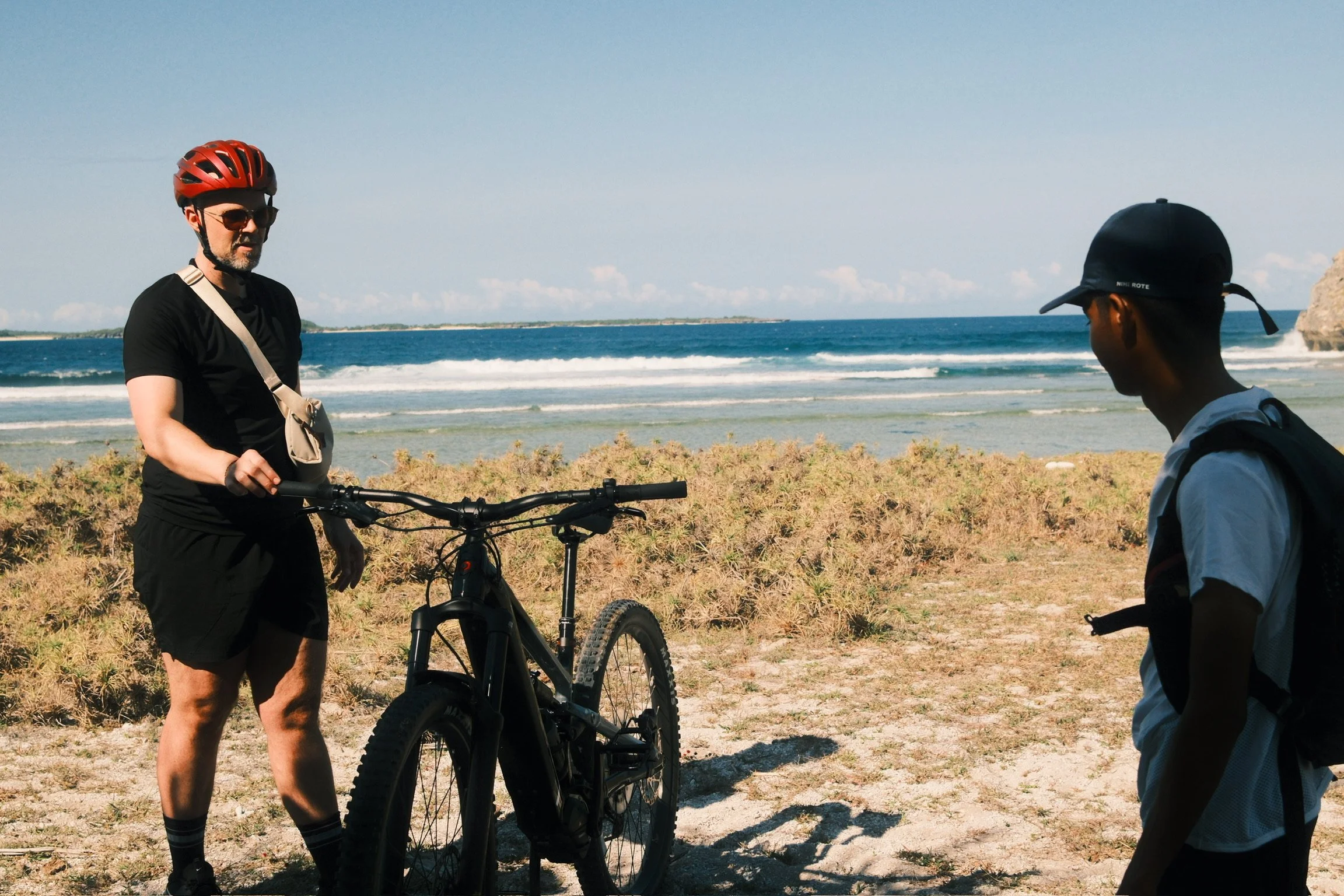
NIHI has invested in some seriously impressive full-suspension electric mountain bikes, and we headed out with Cherish to explore more of the coast. The bikes allowed us to cover a good amount of ground while still feeling connected to the landscape, rather than viewing it through a vehicle window.
We cycled towards other beaches and through parts of the island where we saw almost no other tourists.
Coming from Bali, the contrast was difficult to overstate. Bali remains one of our favourite places in the world, but it can sometimes feel as though everyone has arrived at the same waterfall, café or beach club at exactly the same moment.
Rote is not like that, at least not yet.
There is a great sense of openness here. The roads are quiet, the beaches feel largely empty and you can travel through the island without feeling that the entire landscape has already been packaged into an attraction.
The e-bike excursion was deceptively simple, but it became one of the experiences we talked about most afterwards.
Meeting the people keeping Rotenese traditions alive
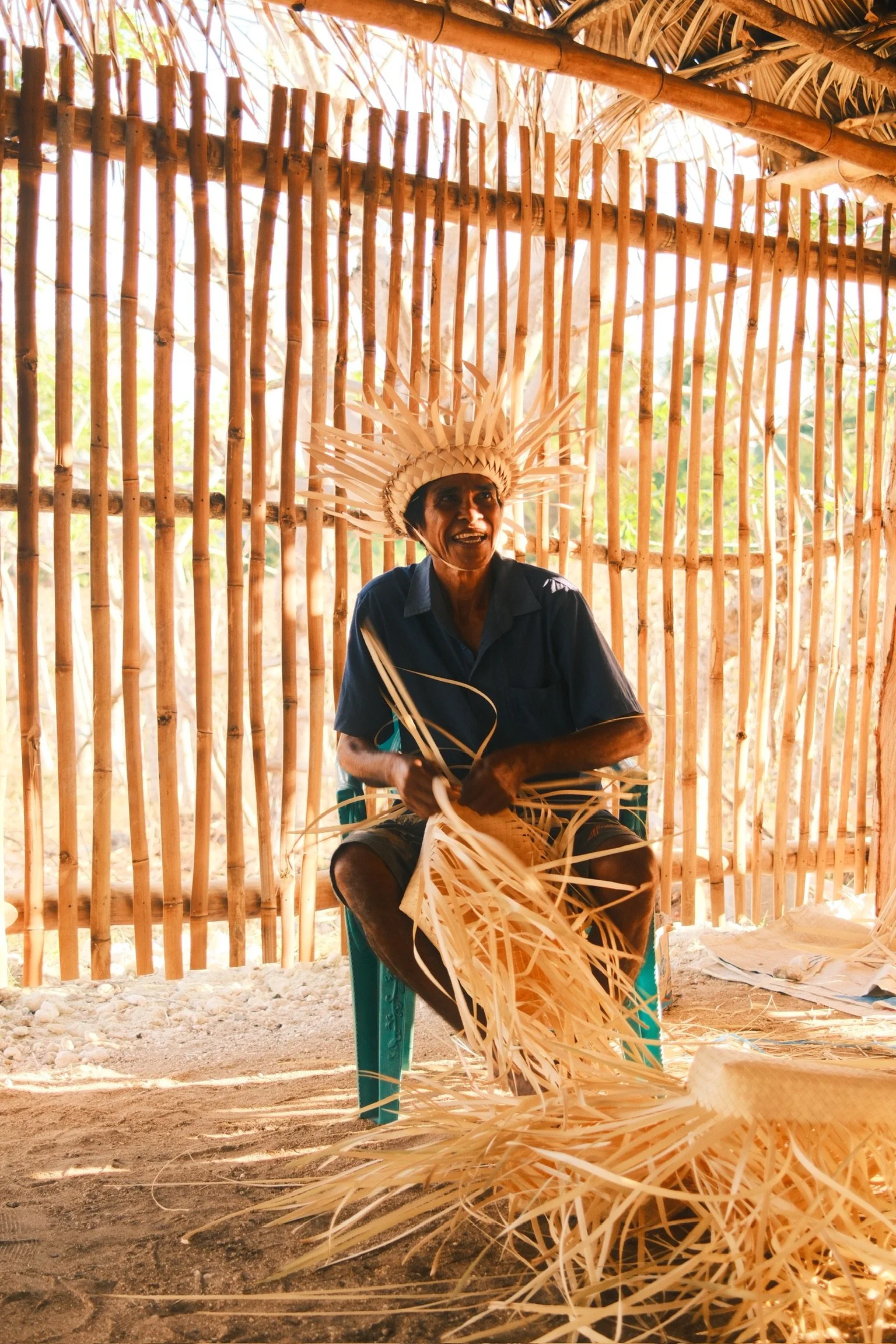
Our time away from the resort also included visits to local villages and the chance to meet one of Rote’s traditional craftspeople.
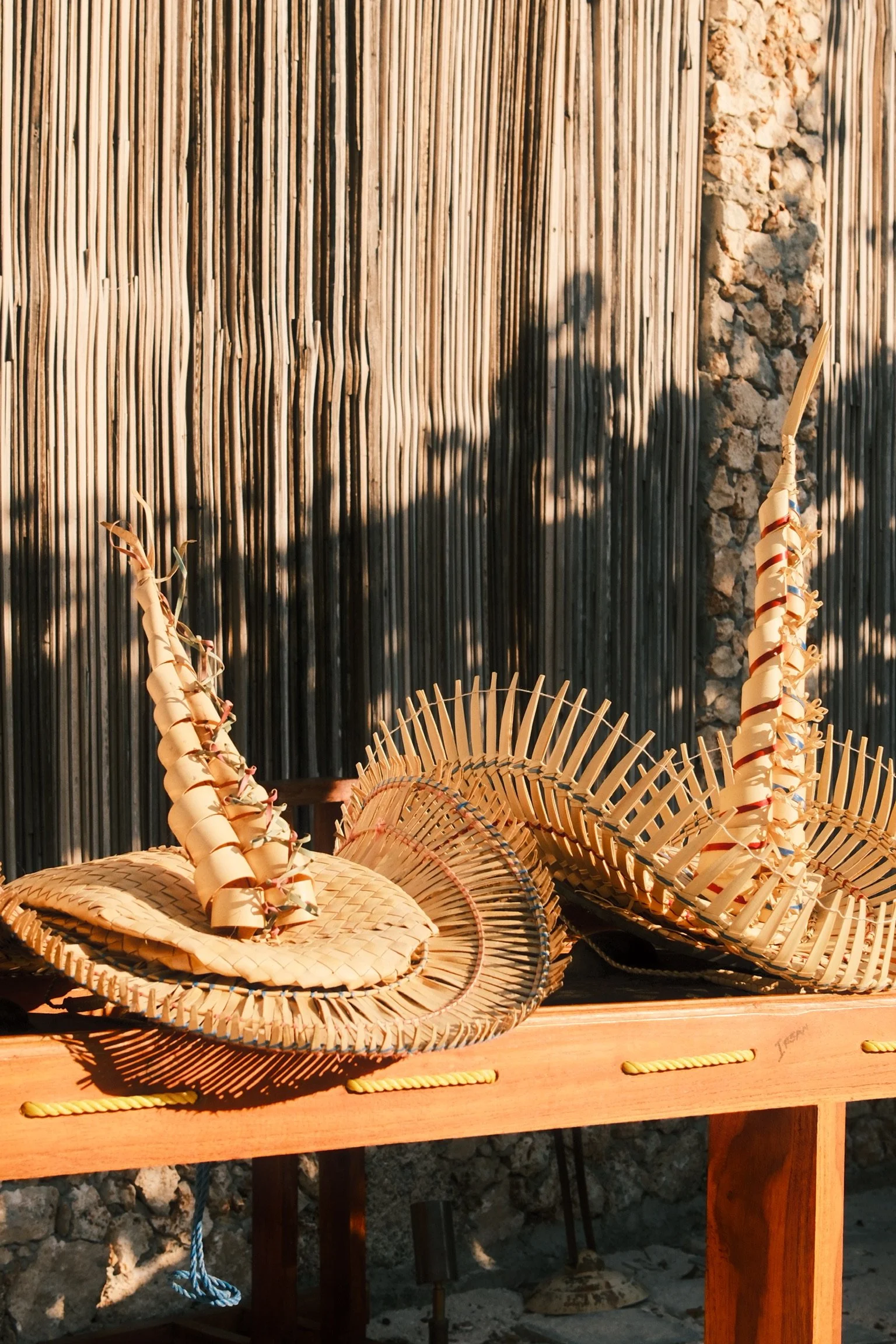
We learnt more about the Ti’i Langga, the distinctive palm-leaf hat that has become a symbol of Rotenese identity, as well as the sasando, the island’s traditional musical instrument.
These are often the moments that Wahyu and I remember most clearly from a trip.
A beautiful villa may be the reason you first notice a hotel or save it on Instagram, but sitting with someone while they explain a craft they have spent years mastering often becomes the part of the journey you continue talking about once you return home.
This is also where NIHI is particularly strong. The resort does not treat Rote simply as a dramatic background for luxury villas. It encourages guests to become curious about the island, its people and the traditions that existed long before the hotel arrived.
That distinction matters somewhere as undeveloped as Rote, where tourism still has the opportunity either to support the character of the island or slowly overwhelm it.
Bapak Hache, a third-generation Rotenese musician and craftsperson, shows us how a traditional Ti’i Langga hat is woven by hand from lontar palm leaves.
The reality of staying at NIHI Rote before it is finished
We need to be clear that we stayed at NIHI Rote very early in its story.
There was visible construction, the main restaurant and swimming pool were still being completed, the gardens need time to mature and the team was not yet delivering the kind of seamless technical service that may eventually become standard.
However, these things should not all be treated as the same type of criticism.
A restaurant can open, a swimming pool can be completed and a team can become more confident relatively quickly. Landscaping will take longer, but it will inevitably change the character of the property as the planting grows and the architecture settles into its surroundings.
Other elements, such as the comparatively compact bathroom in our villa, are permanent design choices and should be judged differently.
That distinction matters when reviewing a resort before its formal opening. We do not want to dismiss temporary issues that will soon disappear, but neither do we want to pretend everything was flawless because the setting was beautiful and the hotel was expensive.
What gave us confidence was the strength of the fundamentals.
The beach is exceptional, the villa plots are extraordinary, the experiences feel connected to the island and the Hospitality Academy gives the resort a reason for existing beyond simply placing another luxury hotel on a beautiful coastline.
Those are the things that cannot be fixed quickly if a hotel gets them wrong. NIHI Rote already has them.
Would we go back to NIHI Rote?
We would return tomorrow.
There are very few resorts that stay lodged in our memory in quite this way. We have been fortunate enough to experience some exceptional remote island hotels across Asia, including Soneva, Bawah Reserve and Song Saa, and the best of them all seem to possess something almost impossible to communicate through a conventional room tour.
It is an intangible kind of magic, and NIHI has captured it on Rote.
The resort was not finished when we visited, nor was every part of the experience perfectly polished. We arrived at the beginning of its story, while people were still learning, gardens were still growing and parts of the resort were still taking shape.
Perhaps that is one of the reasons we connected with it so strongly.
We met people who were genuinely excited to show us their island. We cycled towards beaches without seeing other tourists, paddled through mangroves with almost nobody around and sat with students who may eventually help shape the future of hospitality on Rote.
Rather than feeling as though we had simply passed through a luxurious resort, we felt part of somewhere.
NIHI Rote will inevitably change. The trees will grow, the service will become more polished and more travellers will discover the island. Rote itself may become much better known.
We just hope it never loses the feeling it has now.
Frequently Asked Questions about NIHI Rote
-
We would stay for at least four nights.
In reality, we think a week is better.
The journey is too involved for a quick stop, and limited flights mean you need to plan your itinerary properly.
Rote is also a place that rewards slowing down.
Spend a day at the villa. Go paddleboarding. Take the bikes out. Explore the island. Watch the surfers. Have a long lunch at Nammo.
Do not travel all this way and then rush it.
We would also try to visit during Rote's drier months. Flight schedules and seasonal conditions can change, so check the current routing carefully when you book.
-
NIHI Rote is for adventurous travellers who still want serious comfort.
For those who would rather spend a day paddleboarding through mangroves or cycling to an empty beach than choosing between ten restaurants.
It is for surfers, obviously.
But you absolutely do not need to surf to understand the appeal.
It is also for people who enjoy meeting the team, asking questions and feeling connected to the place they are staying.
If the limited flights, small aircraft and remote location already sound stressful, we would probably look elsewhere.
There are much easier luxury hotels to reach.
That is not really why you come to Rote.
You come because there are increasingly few opportunities to stay somewhere this premium, on an island this undeveloped, and still feel as though tourism has not completely dictated the rhythm of the place.
-
NIHI Rote sits firmly in ultra-luxury territory.
Think around £1,000 per night and upwards, depending on villa category, season and the rate available when you book.
Full-board dining and non-alcoholic drinks are included, which makes the price easier to understand, although alcohol and certain experiences can quickly increase the final bill.
We suspect NIHI Rote will only become more expensive as the resort establishes itself.
So, is it worth it?
For the right person, yes.
This is not simply about the room.
You are paying for the remoteness, the space, the beach, the experiences and the enormous logistical operation required to deliver this level of hospitality on Rote.
But more than that, you are buying into a very particular kind of stay.
-
The wellness offering was still developing during our visit.
The main spa was under construction towards the rear of the resort, so we cannot give a full verdict on the eventual spa experience yet.
There is already a large, well-equipped gym and a dedicated yoga space.
The resort is large enough to create space, but with only 21 villas, it never feels like a huge resort.
-
We have stayed at both, and we do not think this is really a question of better.
NIHI Sumba feels like a world that has been built layer by layer over many years.
It is more polished. Its rituals are established. The gardens are mature. The team has had years to create the stories and small moments that have made the resort so famous.
NIHI Rote is smaller, more intimate and, right now, considerably rawer.
Where NIHI Sumba has the work of the Sumba Foundation woven into its story, Rote has the Hospitality Academy.
Rote feels like the beginning.
And there is something incredibly exciting about that.
If you want the more complete and polished NIHI experience today, Sumba probably has the edge.
If the idea of seeing somewhere while its personality is still forming excites you, Rote is very special.
The obvious answer?
Do both.
You can connect Rote and Sumba via Kupang, and we cannot think of many better two-resort trips in Indonesia.
-
Matt and Wahyu travelled with The Ultimate Travel Company based in Fulham, London. To get in touch email enquiry@theultimatetravelcompany.co.uk