Bhutan: The Picture, The Place, and The Space Between
Words by MattUnless otherwise stated, all images are our own. Please contact us before reproducing or using them.In 2005, I saw a photograph on someone’s wall and, without realising it at the time, gave myself a problem.
I was at university, working on a group project at a fellow student’s house, when I noticed it. A picture of lakes in the Himalayas. Still, blue, impossible-looking water, with mountains rising behind them.
I asked where it was.
“Bhutan,” she said. “The Snowman Trek.”
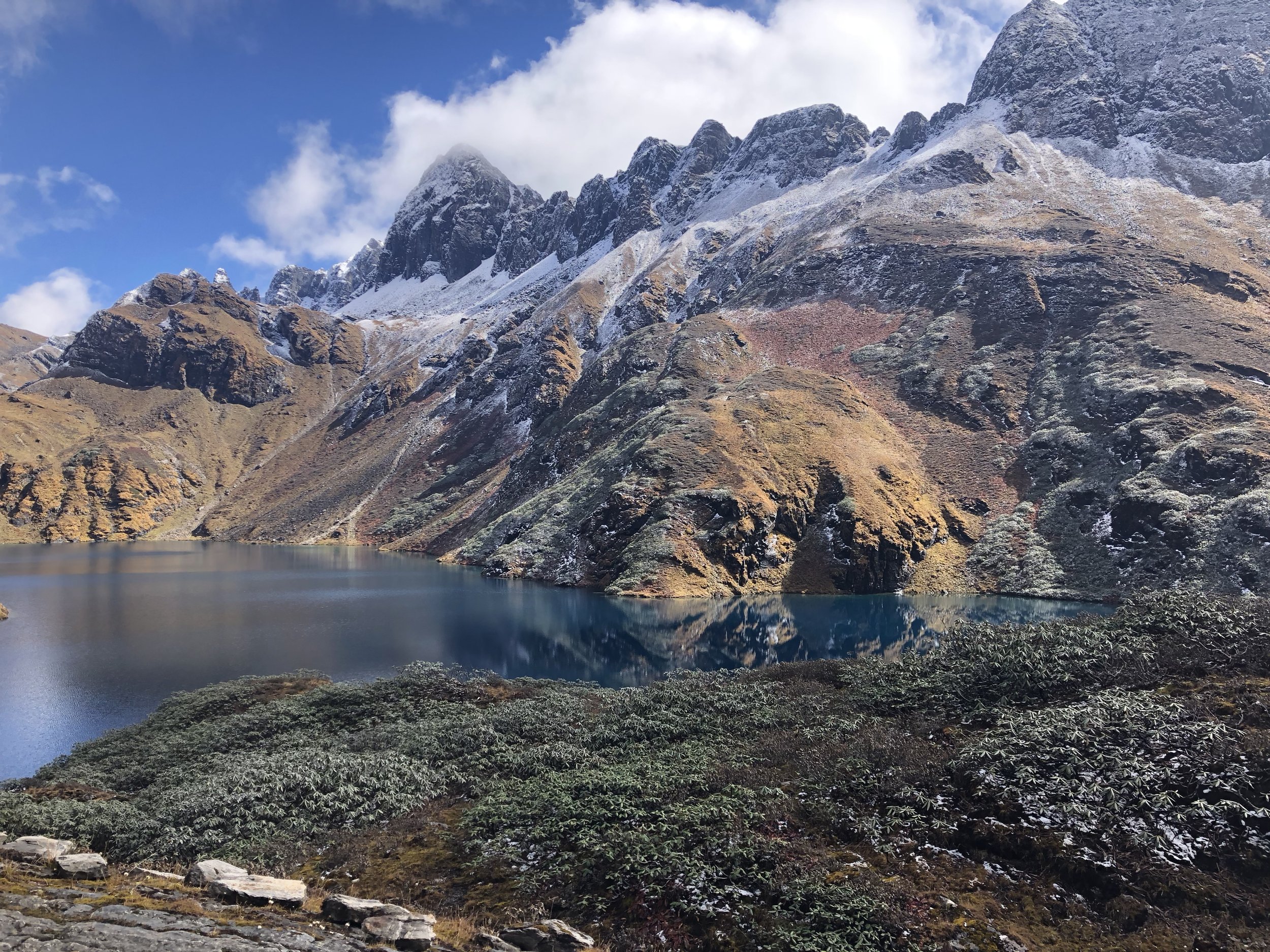
Matt’s view from the Snowman Trek in Bhutan, 2018
That was it. The seed was planted.
At the time, I had barely travelled. I didn’t come from a family of trekkers or long-haul adventurers. But something about that image stayed with me. Not as a vague travel wish, but as a quiet promise.
One day, I wanted to stand there.
Years later, after many failed attempts to save and book the trip, I finally did it. In 2018, I joined the Snowman Trek, a near month-long journey through some of the most remote parts of Bhutan.


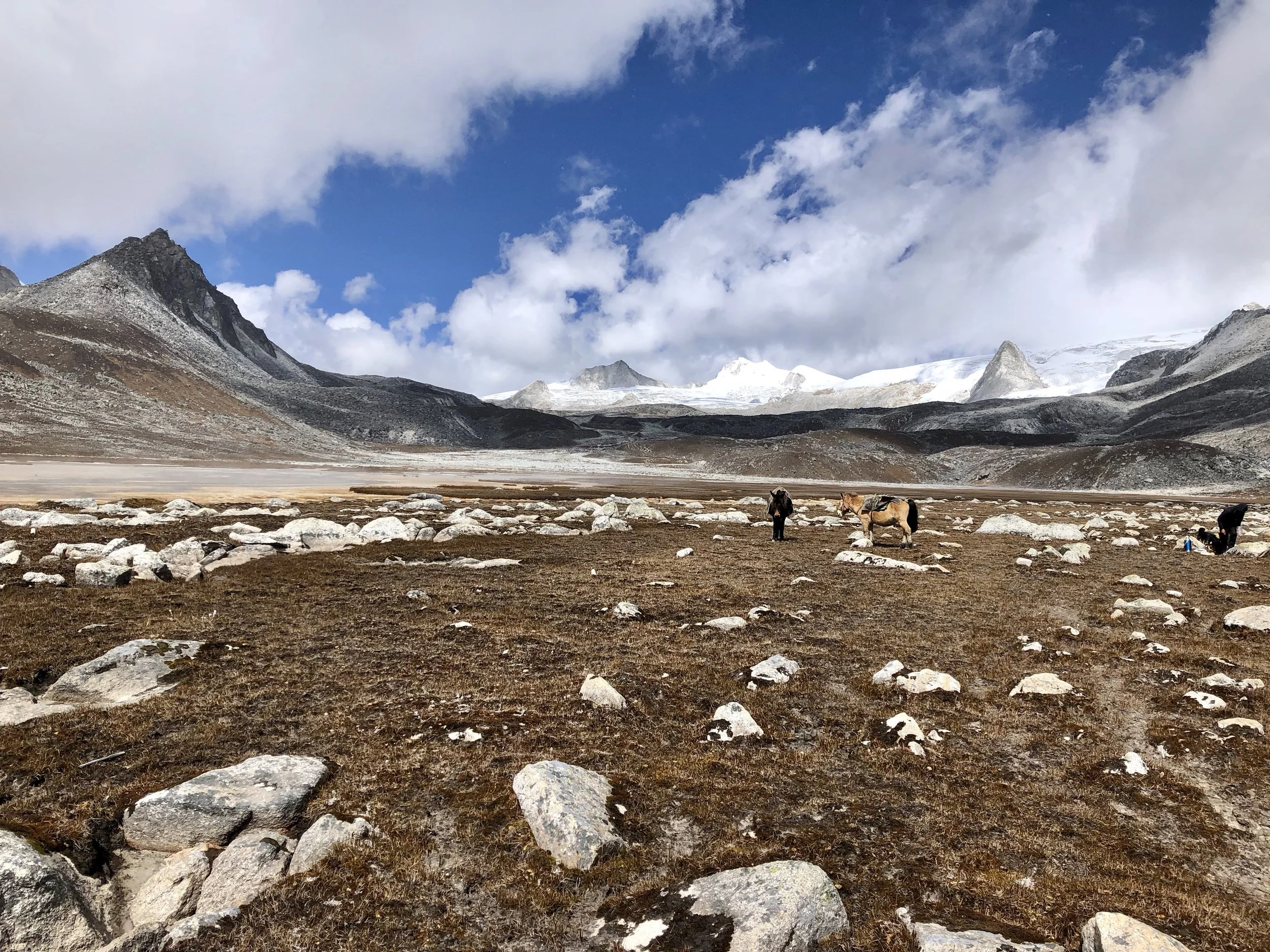


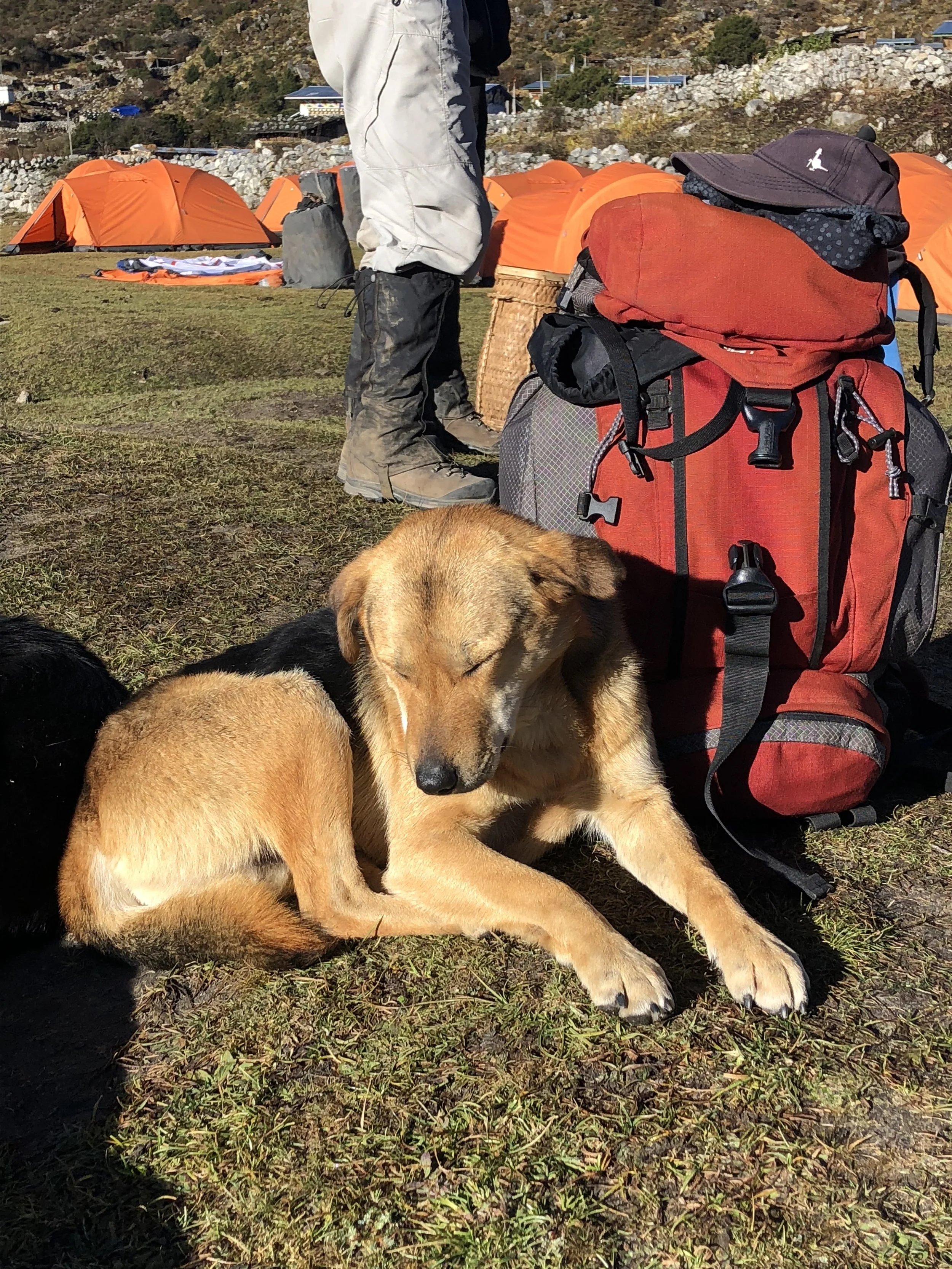
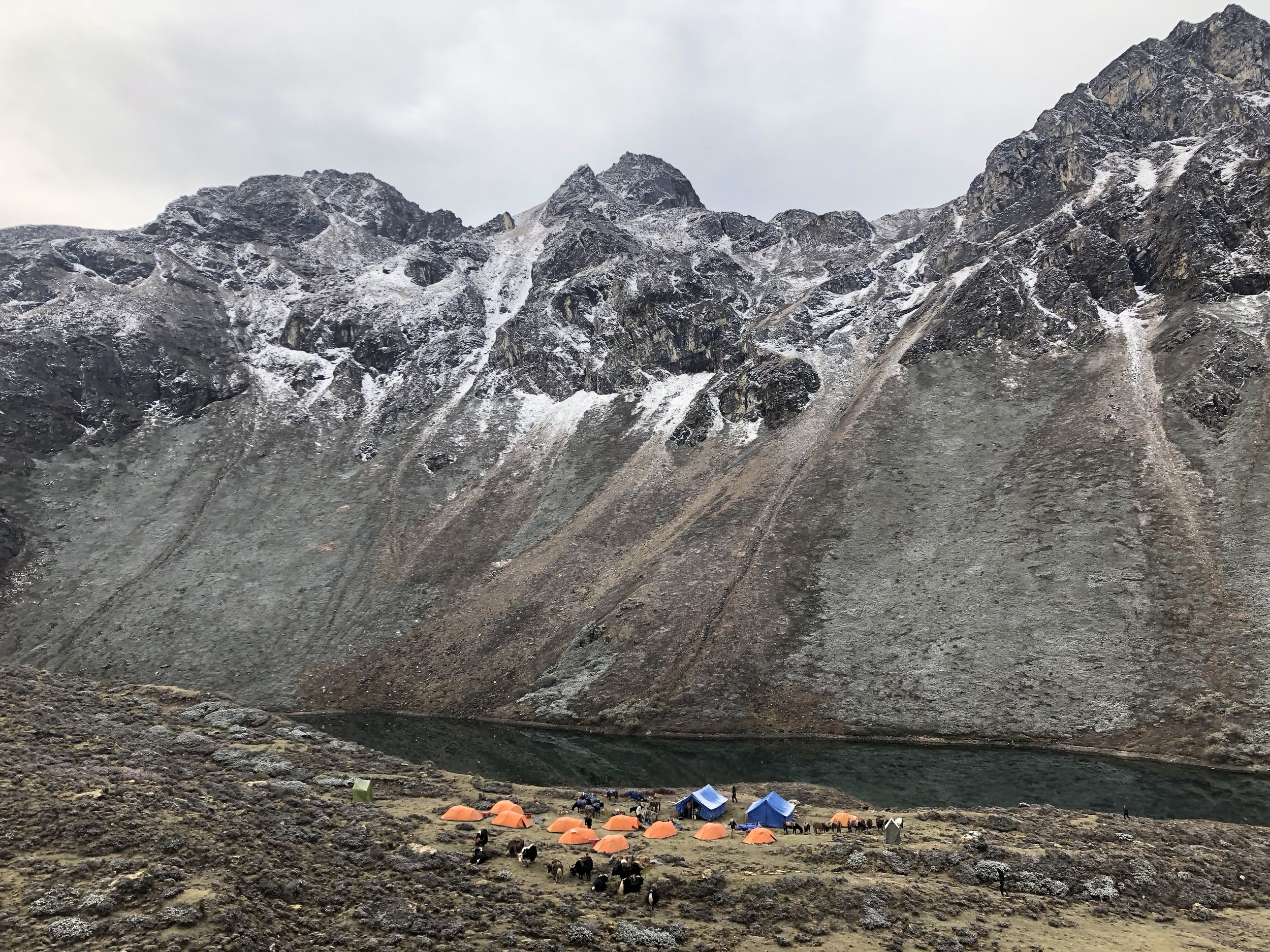

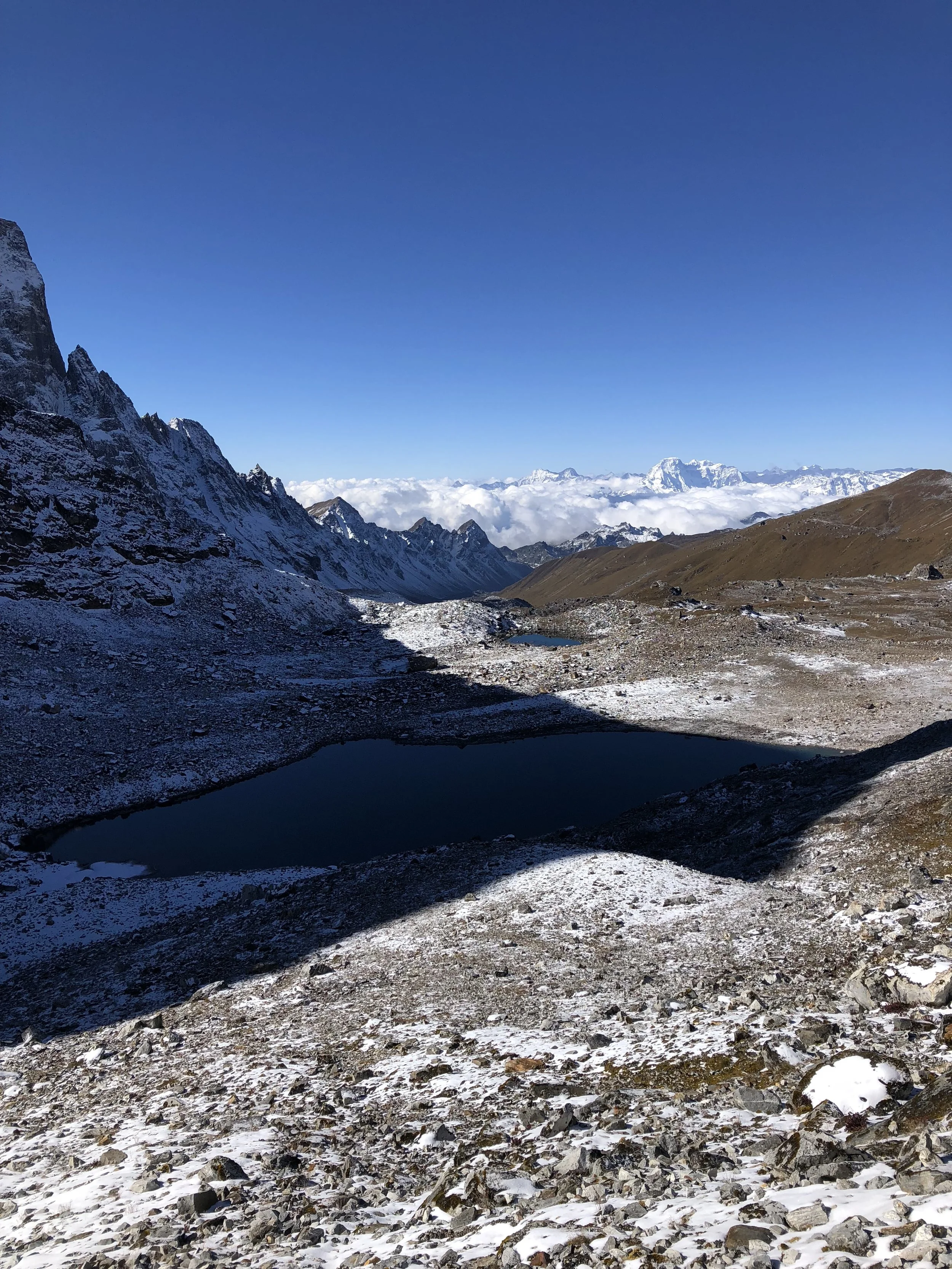
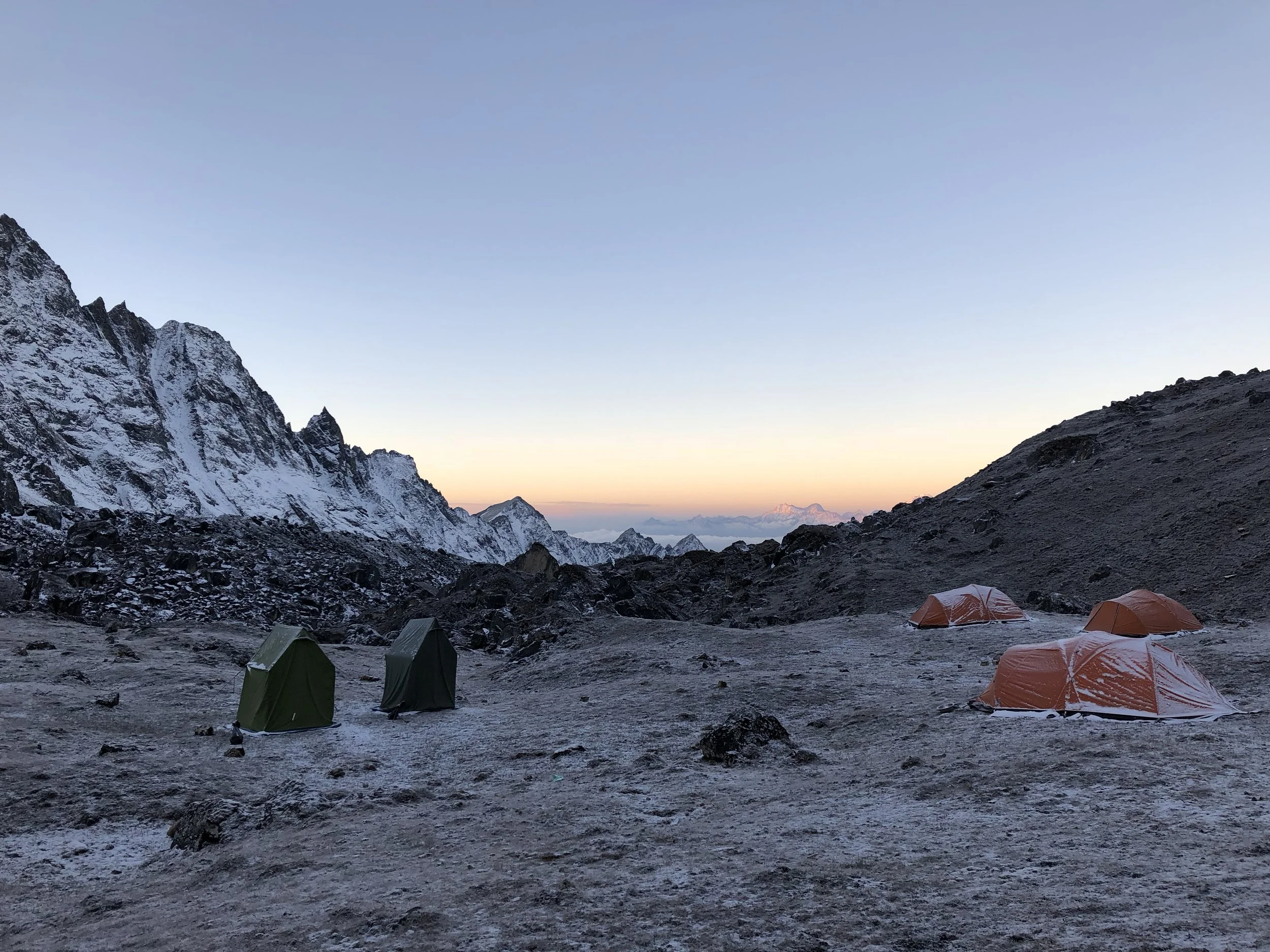

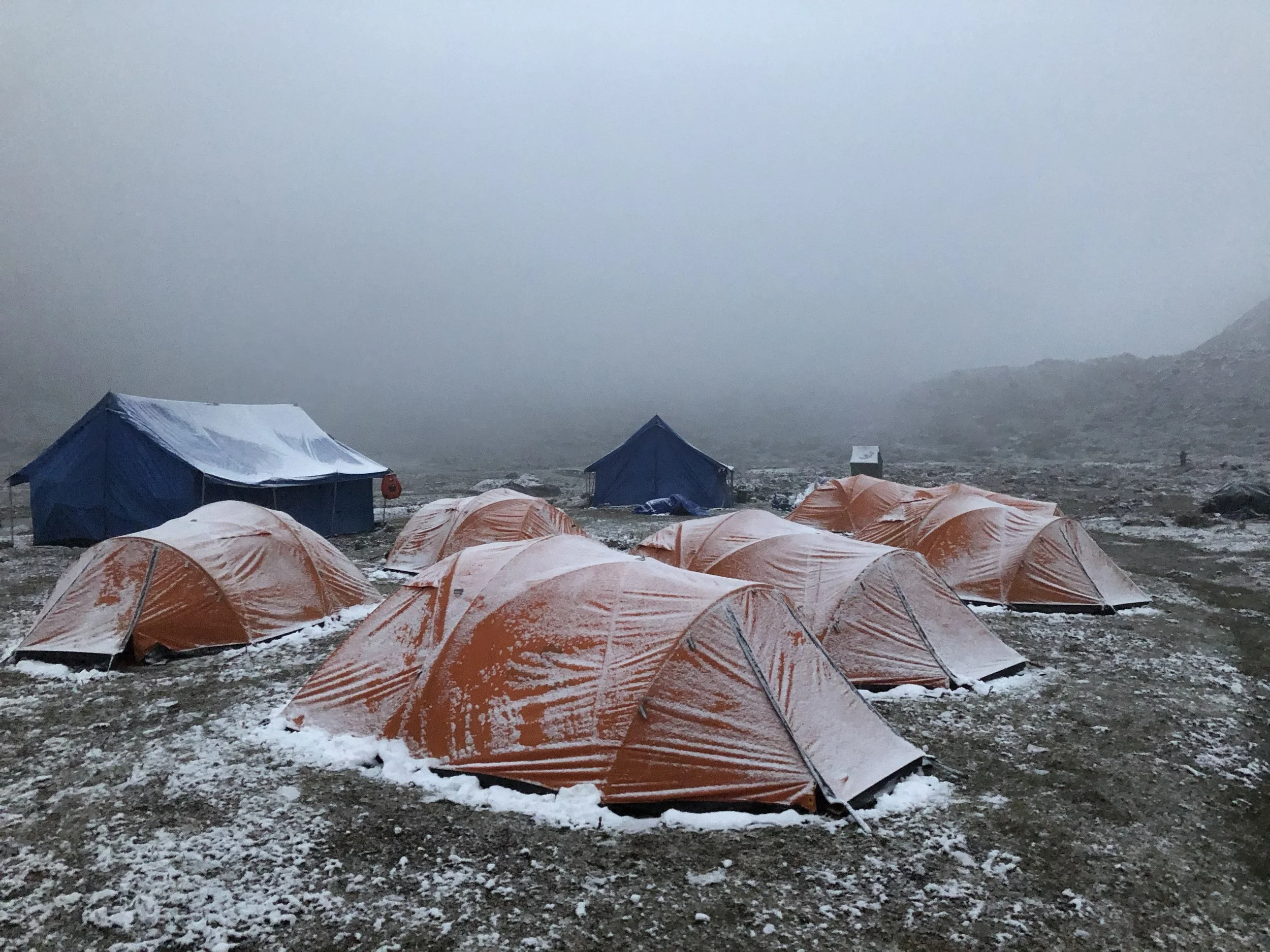
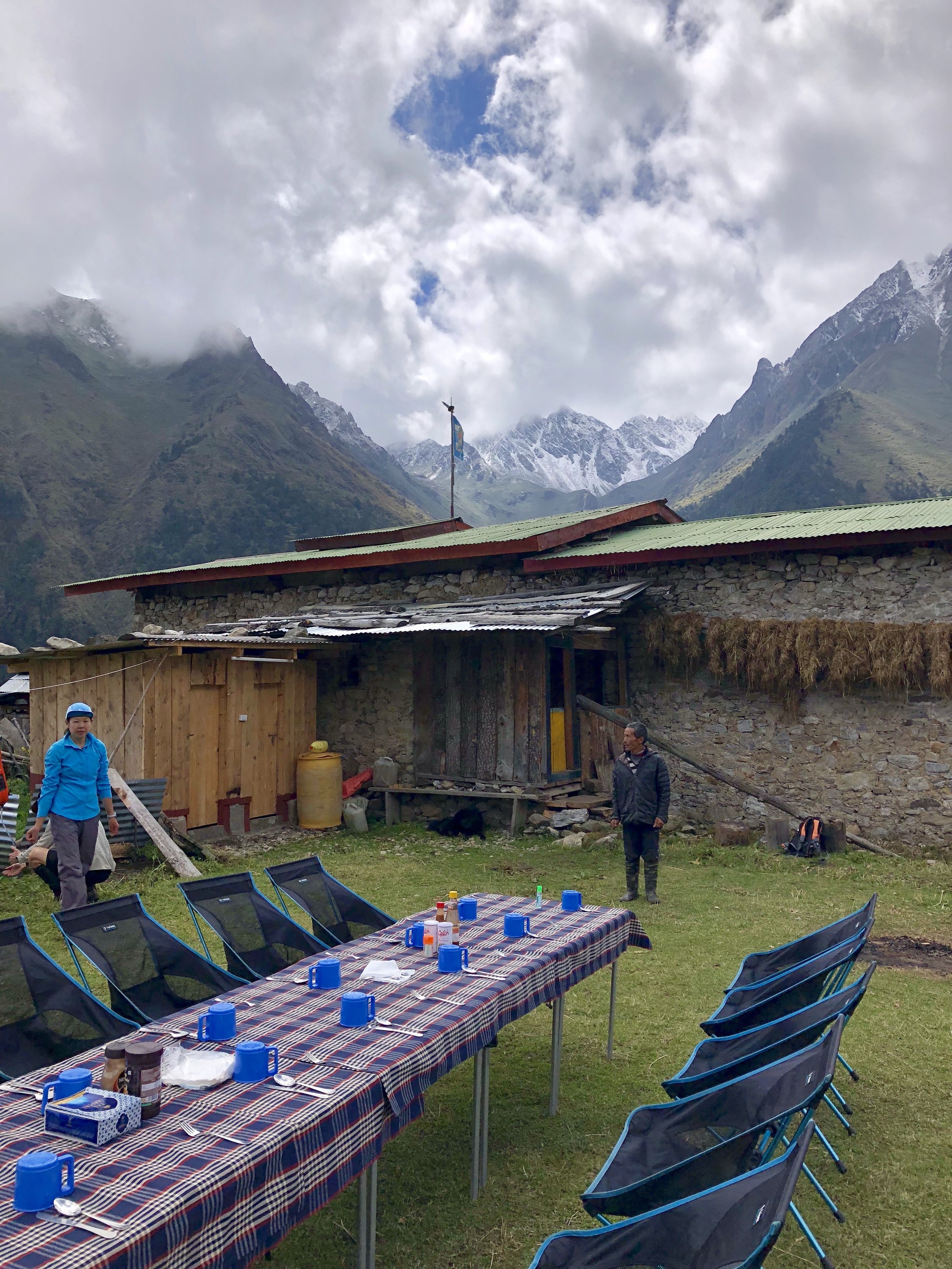
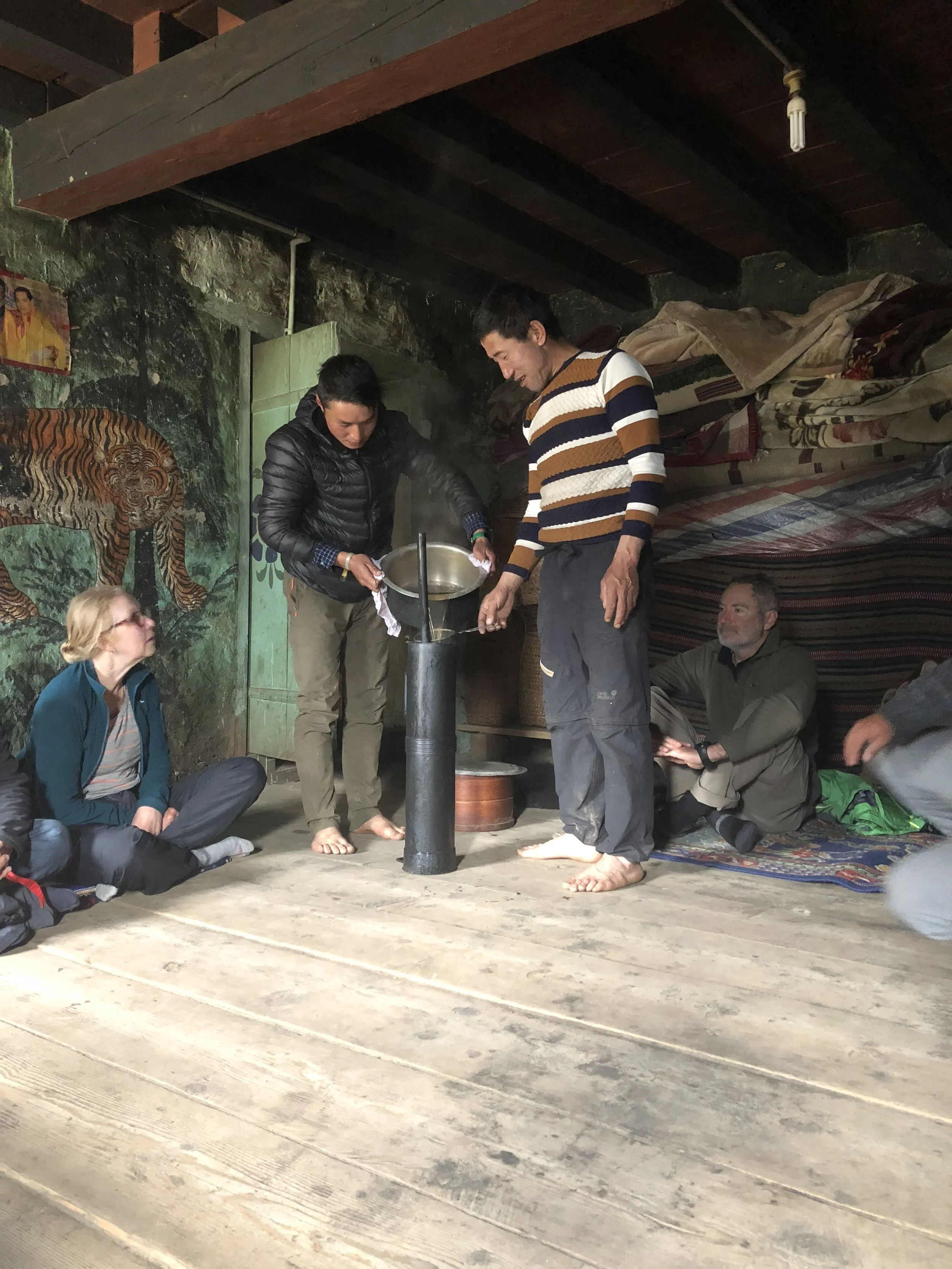
“It was hard, beautiful, absurdly vast and, at times, completely overwhelming. But when I finally stood by those lakes, the moment was not just about the view. It was about the fact I had shaped my life enough to get there.”
I had gone from someone who had barely travelled to someone standing inside the photograph that started it all. Years later, Bhutan came back into my life in a way I never expected. I was sitting at a travel trade show when someone from Six Senses Bhutan asked what I thought about moving there to work across their five lodges.
Bhutan again. This time not as a dream. Not as a trek. Not as a photograph on a wall. As a life.
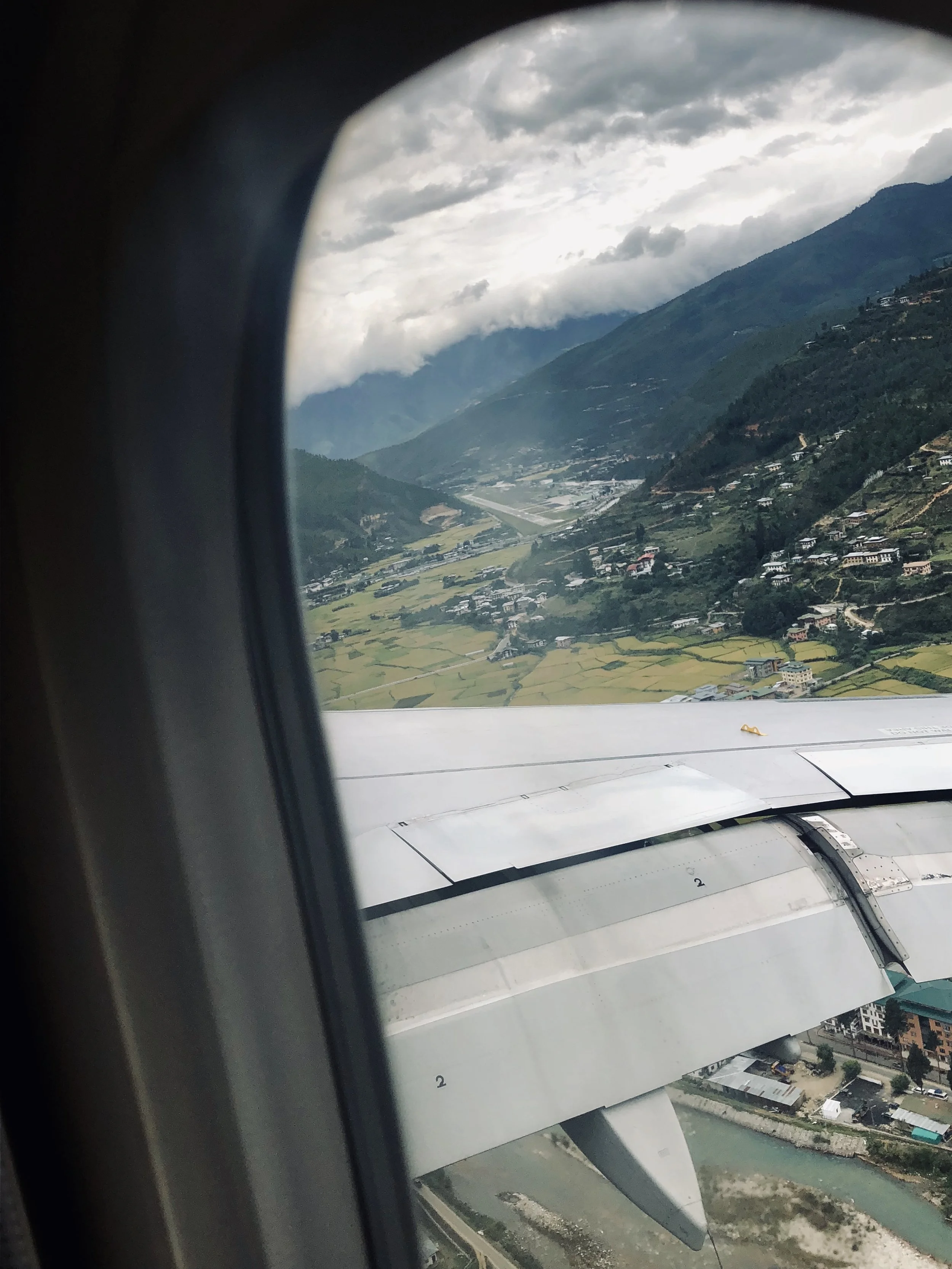
A dramatic descent into Paro, Bhutan
Flying into Paro is one of those travel experiences that already feels slightly unreal. The plane twists between mountains, the runway appears almost impossibly late, and just before landing, music begins to play through the cabin. It is probably meant to calm you down.
It also feels, in hindsight, very Bhutanese. A gentle reminder to breathe as the mountains close in around you.
When I landed the first time, I was arriving as a traveller chasing a long-held dream. When I landed again, Wahyu was beside me, and the same music felt different.
For me, Bhutan had history. For Wahyu, it was a leap into someone else’s dream.
We had been living in Bali, and although he was ready for a change, I think it is fair to say he imagined the next chapter might involve a little more London glitz and a little less momo, mountain roads and Buddhist chanting. He was nervous, but excited. Suddenly surrounded by mountains in a way that did not feel quite real. It was unfamiliar, untouched, and completely different from anywhere he had been before.
And that is where our Bhutan story really began.
Because visiting a country and living in a country are not the same thing.
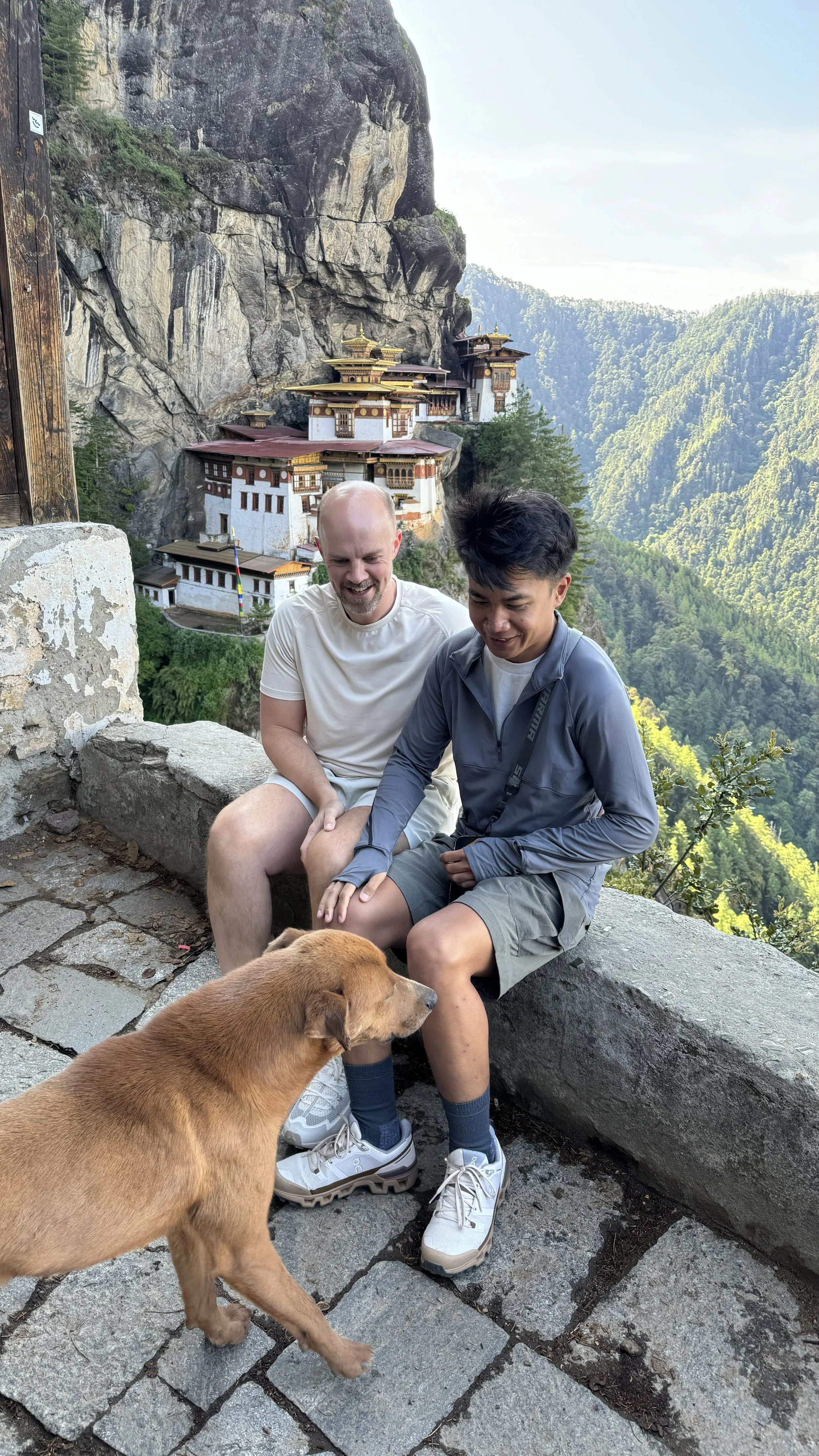
A special moment at Tiger’s Nest Monastery in Bhutan
On holiday, you experience the edited version. The beautiful drives, the warm cups of tea, the monastery visits, the view from the terrace. Living somewhere puts the ordinary bits back in.
The food shop. The work week. The weather. The lack of convenience. The things you did not know you depended on until they disappeared. For me, embarrassingly, it was yoghurt.
I am obsessed with yoghurt, and suddenly buying dairy was not straightforward. It sounds ridiculous, but those are the things you do not think about when you are travelling. On holiday, you are not trying to build a normal Tuesday.
For Wahyu, it was familiar foods, beauty products and the slow collapse of a polished grooming routine. The immaculate haircut became more of a survival mane situation. Momos, by the end, became salvation.
Small things, but small things become big when they are part of daily life.
And yet, that was also the gift of it.
Working in Bhutan meant we crossed a threshold most travellers never do. We were not only being guided through the highlights. We were slowly learning how a place works when the itinerary stops.
Wahyu, who would normally be the first person photographing interiors and design details, found himself paying more attention to the people. The community spirit. The younger generation. The way tradition and modernity seemed to sit beside each other, not always neatly, but naturally.
That became one of the biggest lessons.
Bhutan is often flattened into a few easy ideas: the happiest place on earth, the Buddhist kingdom, the country with national dress, the place without traffic lights.
And yes, those stories exist for a reason. But they are not the whole country.
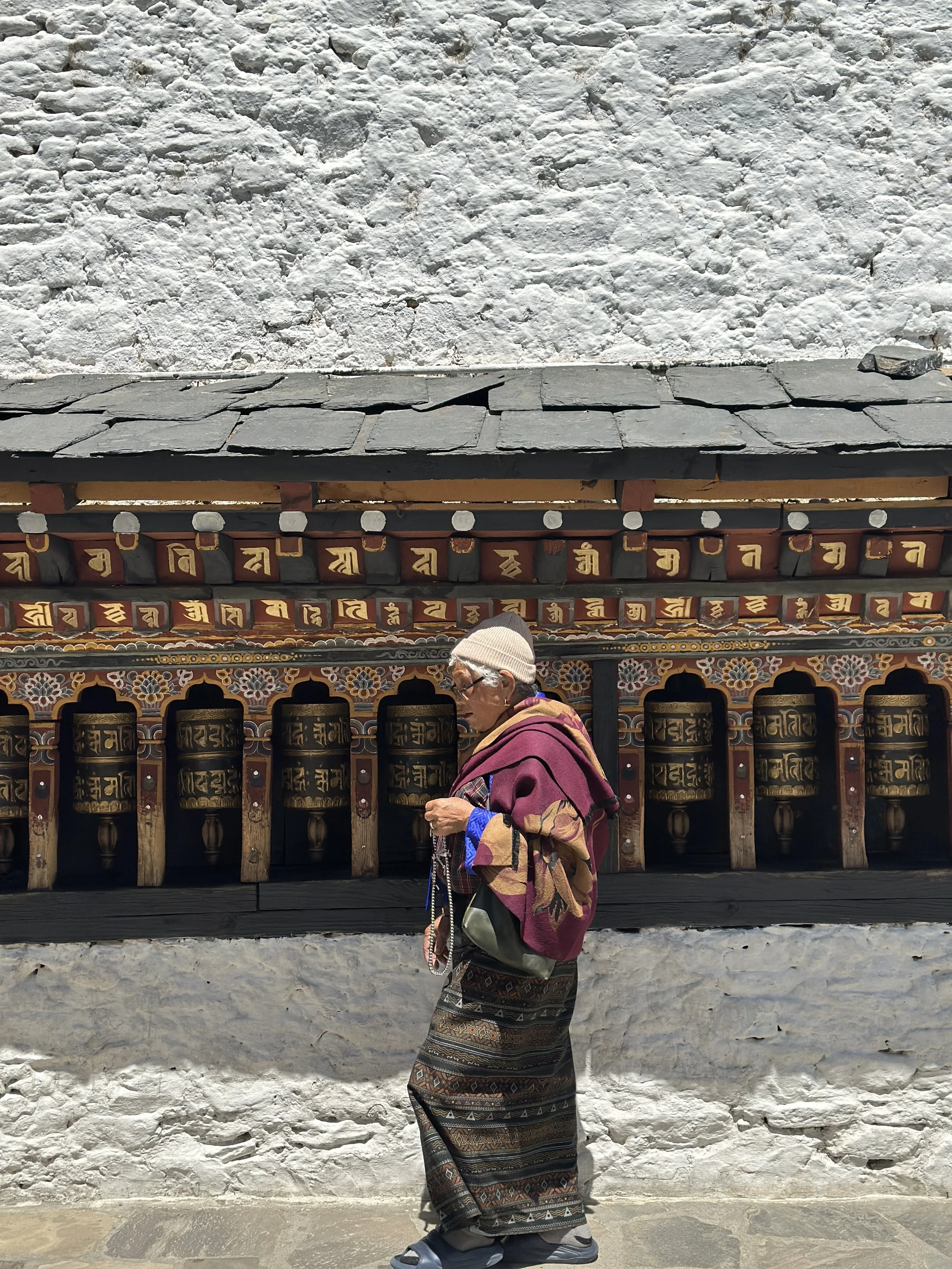
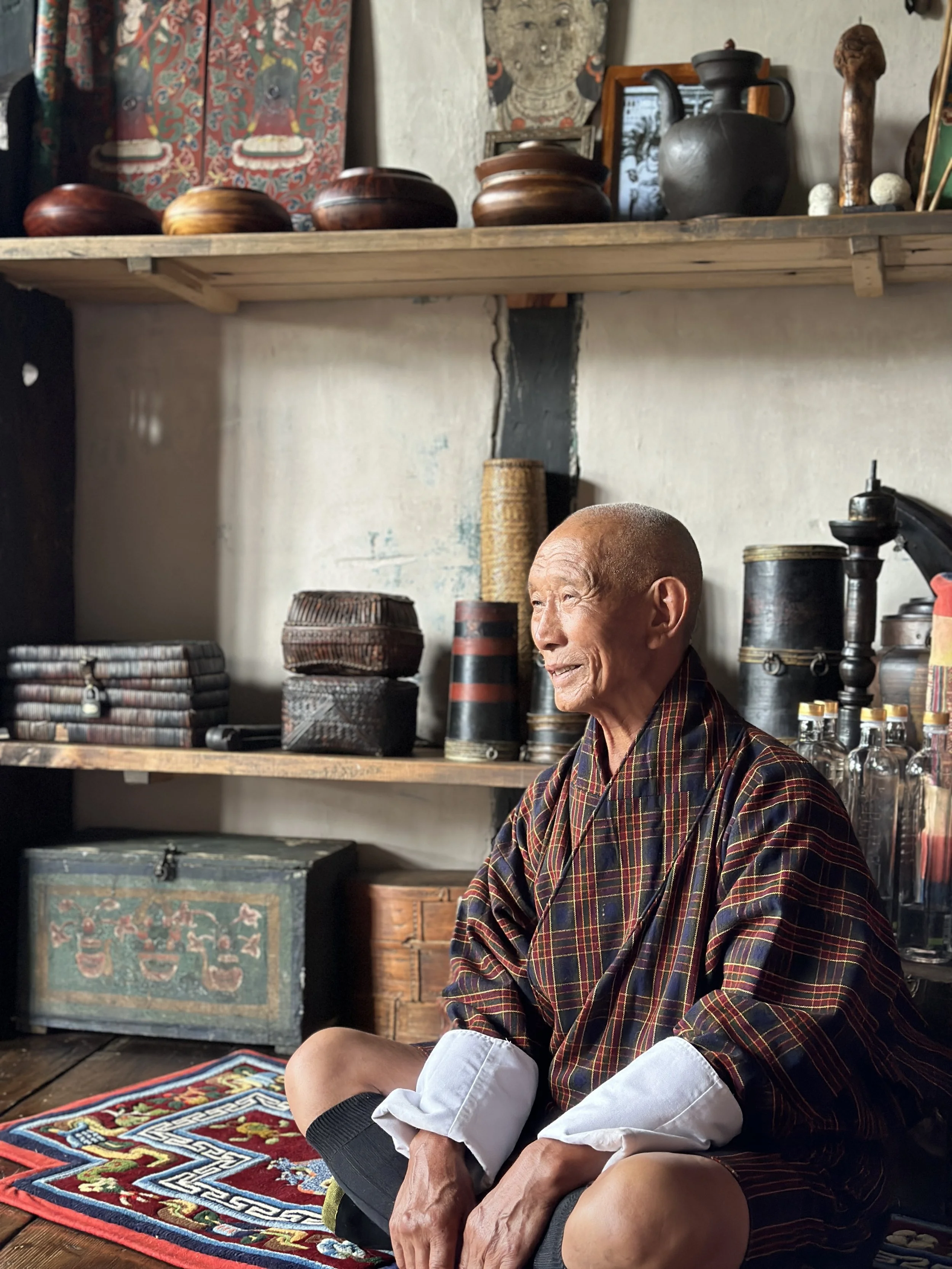

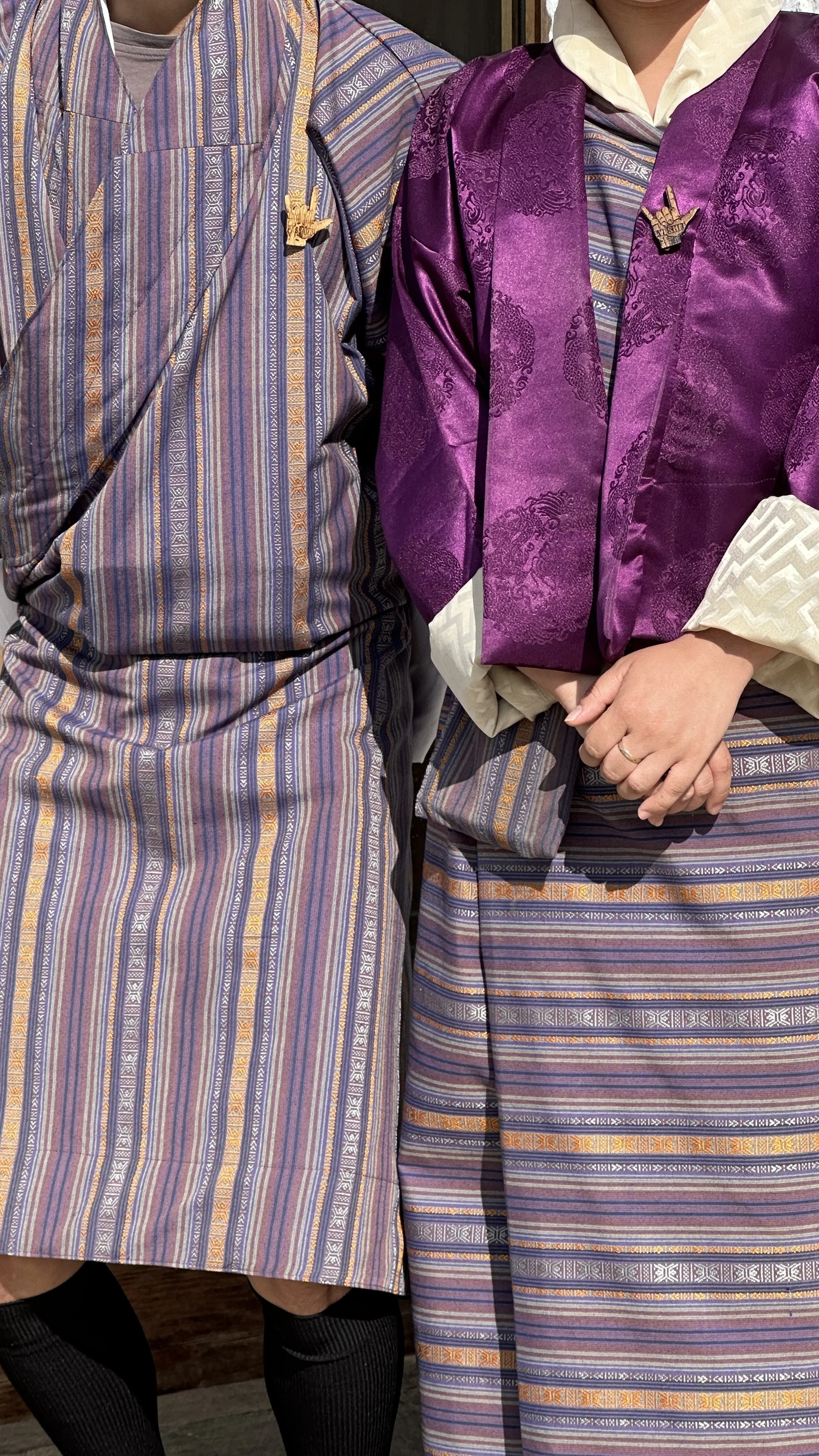



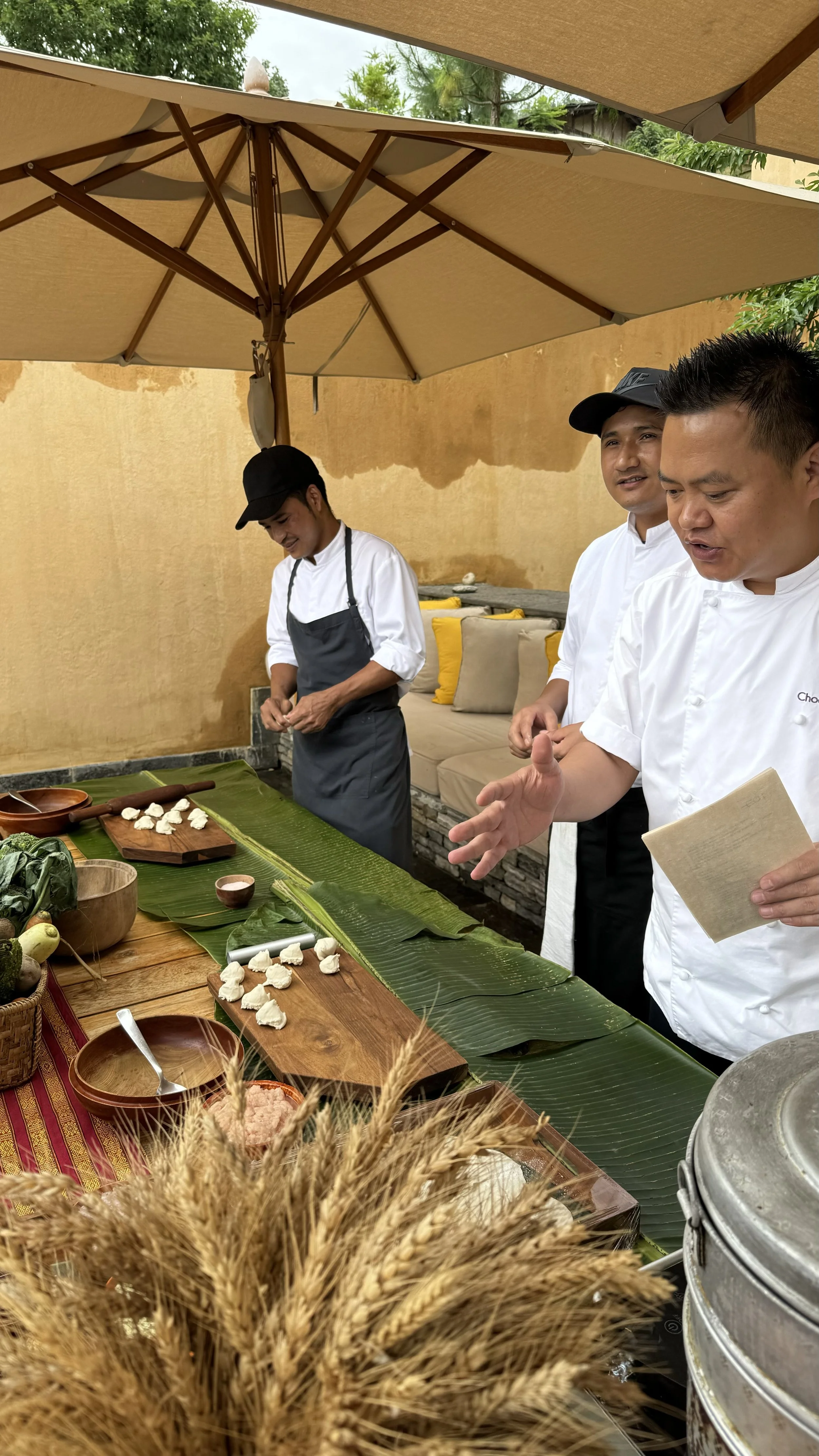
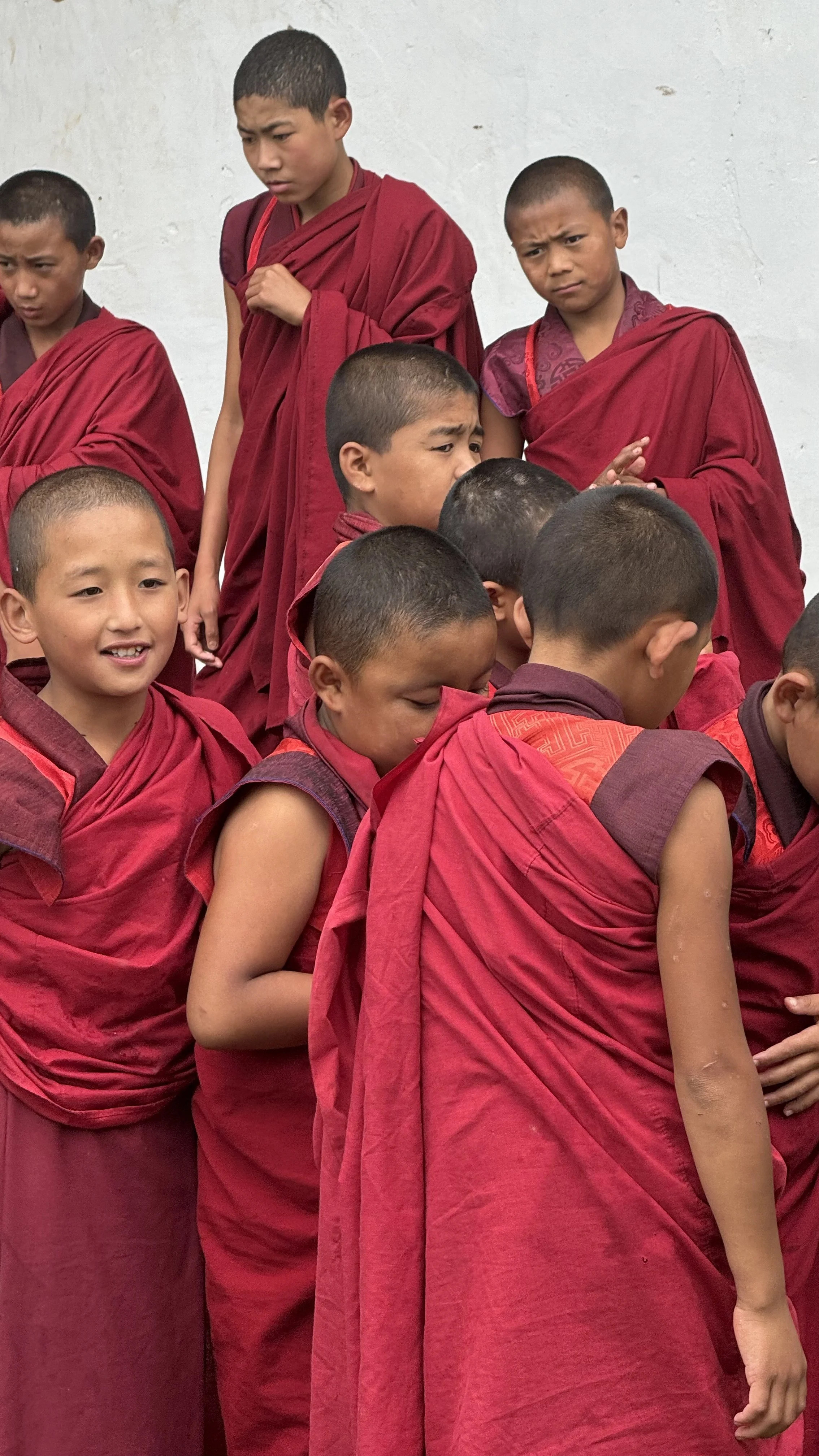
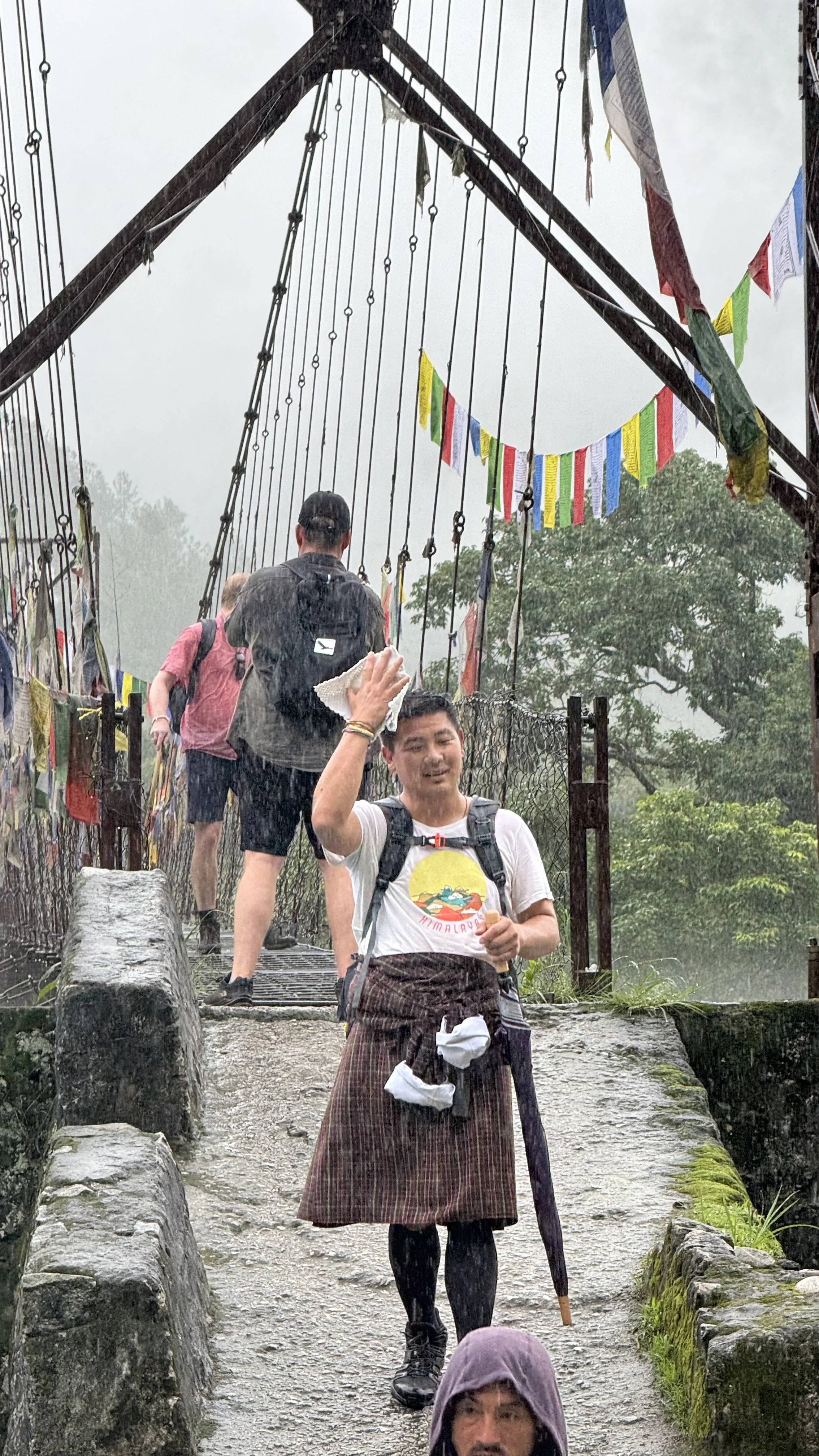

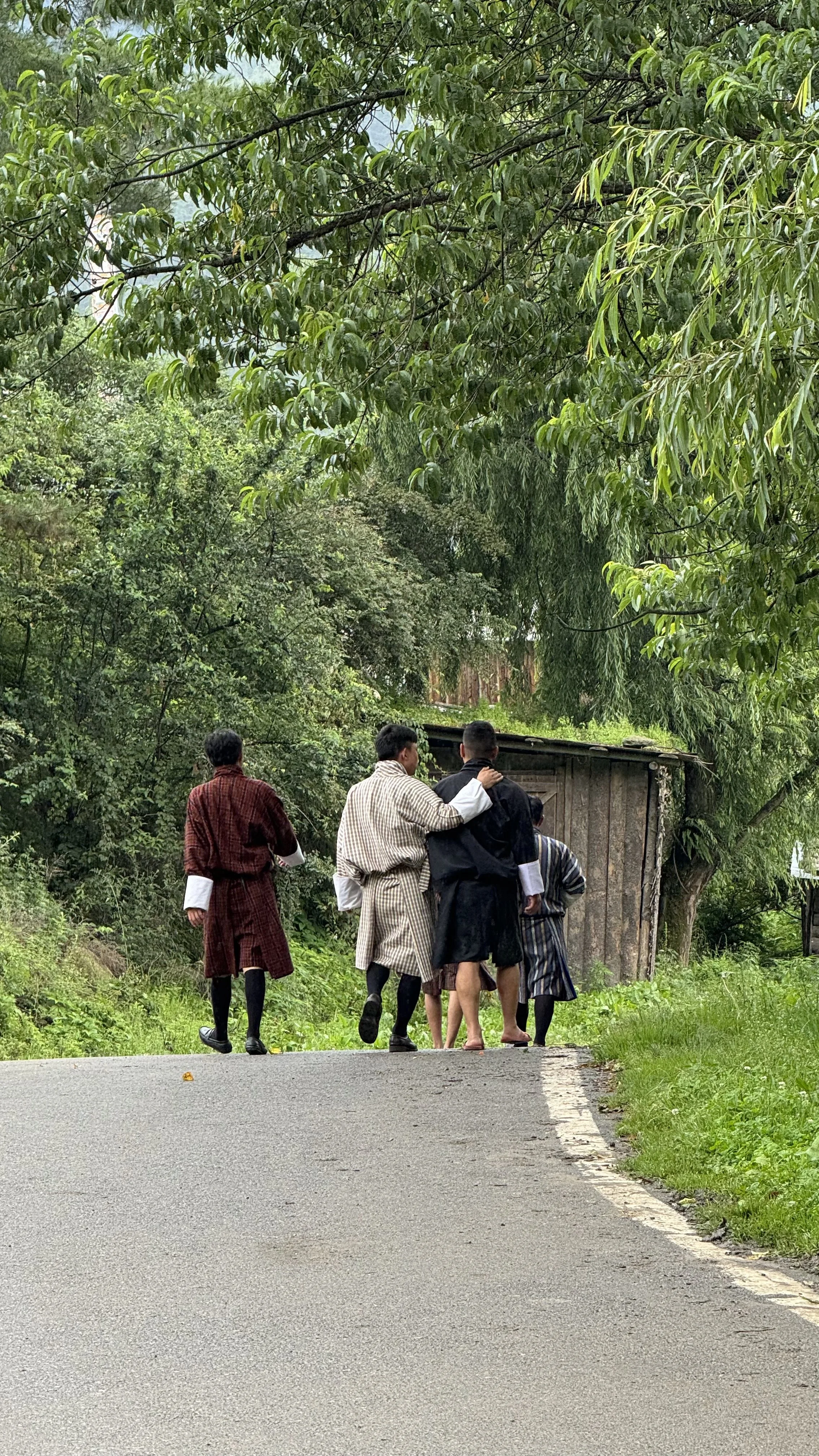
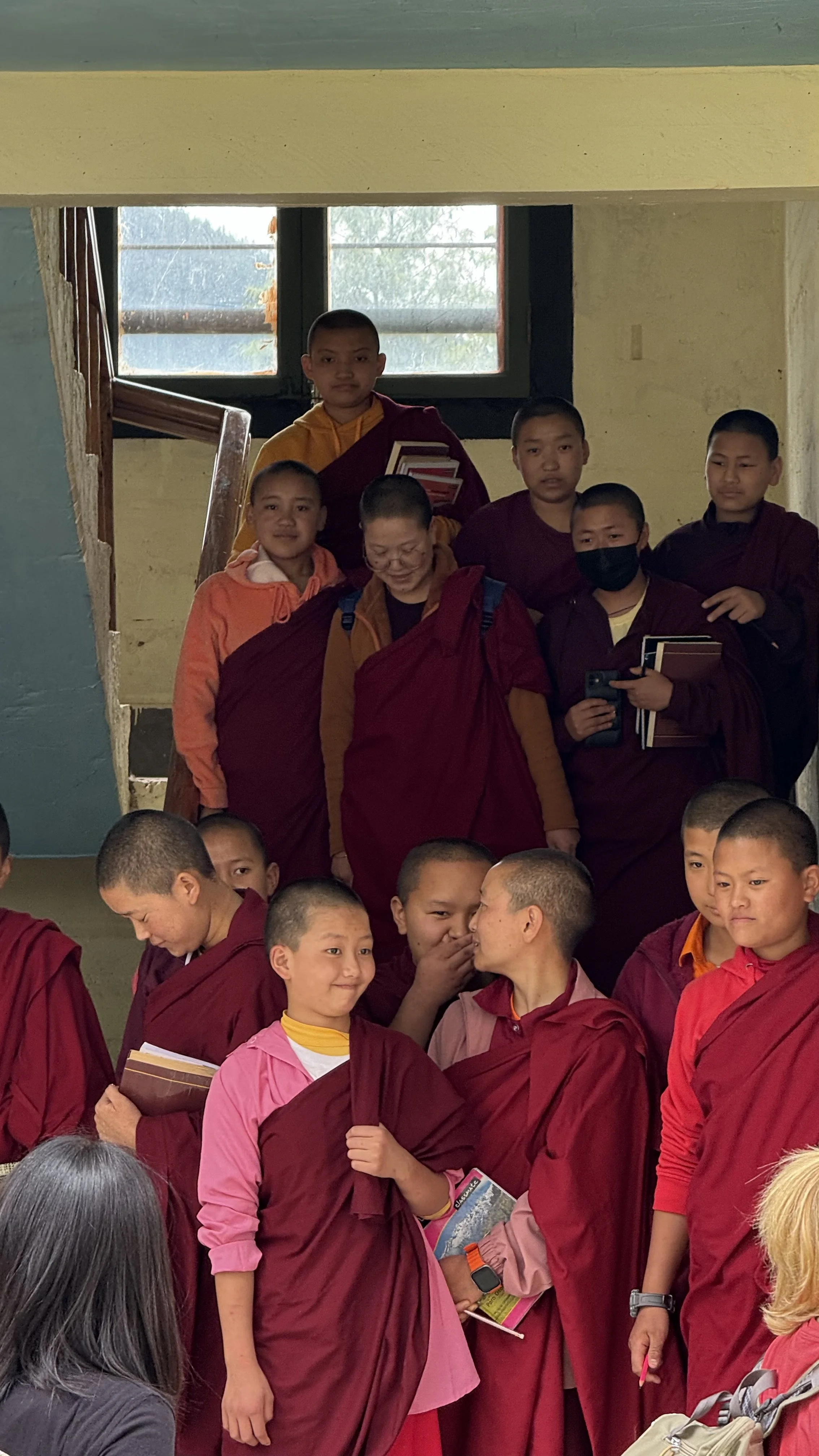
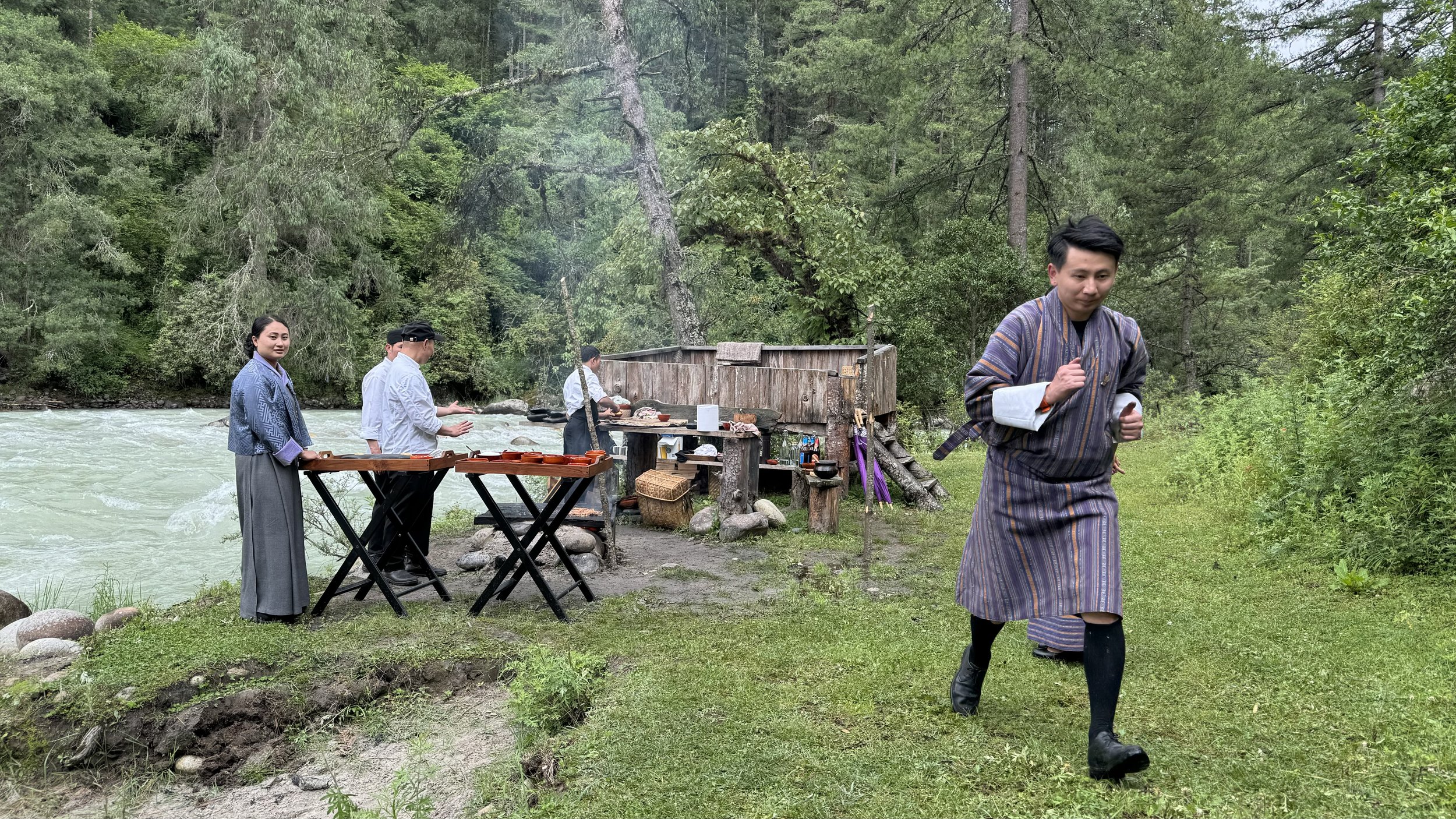
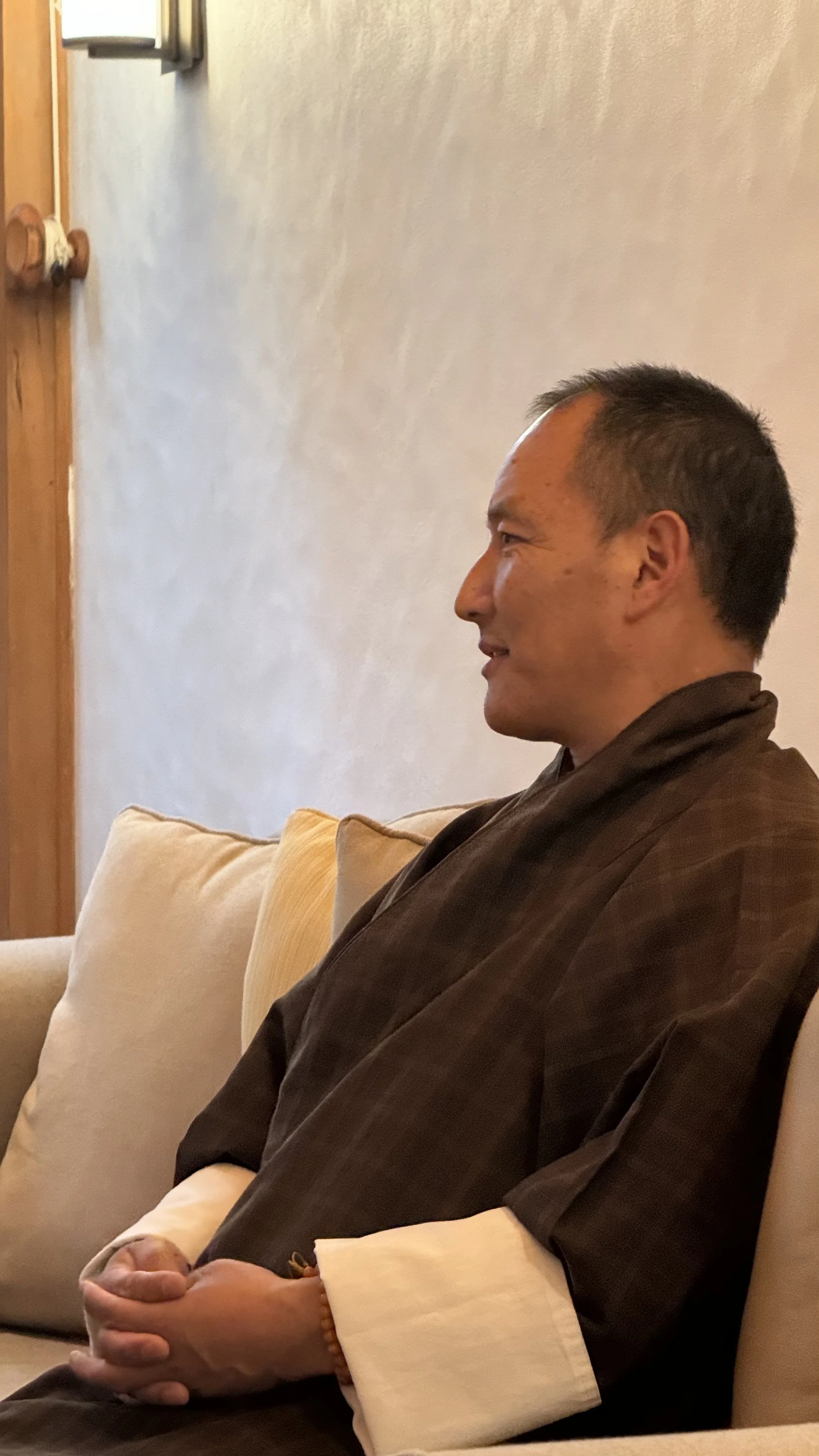
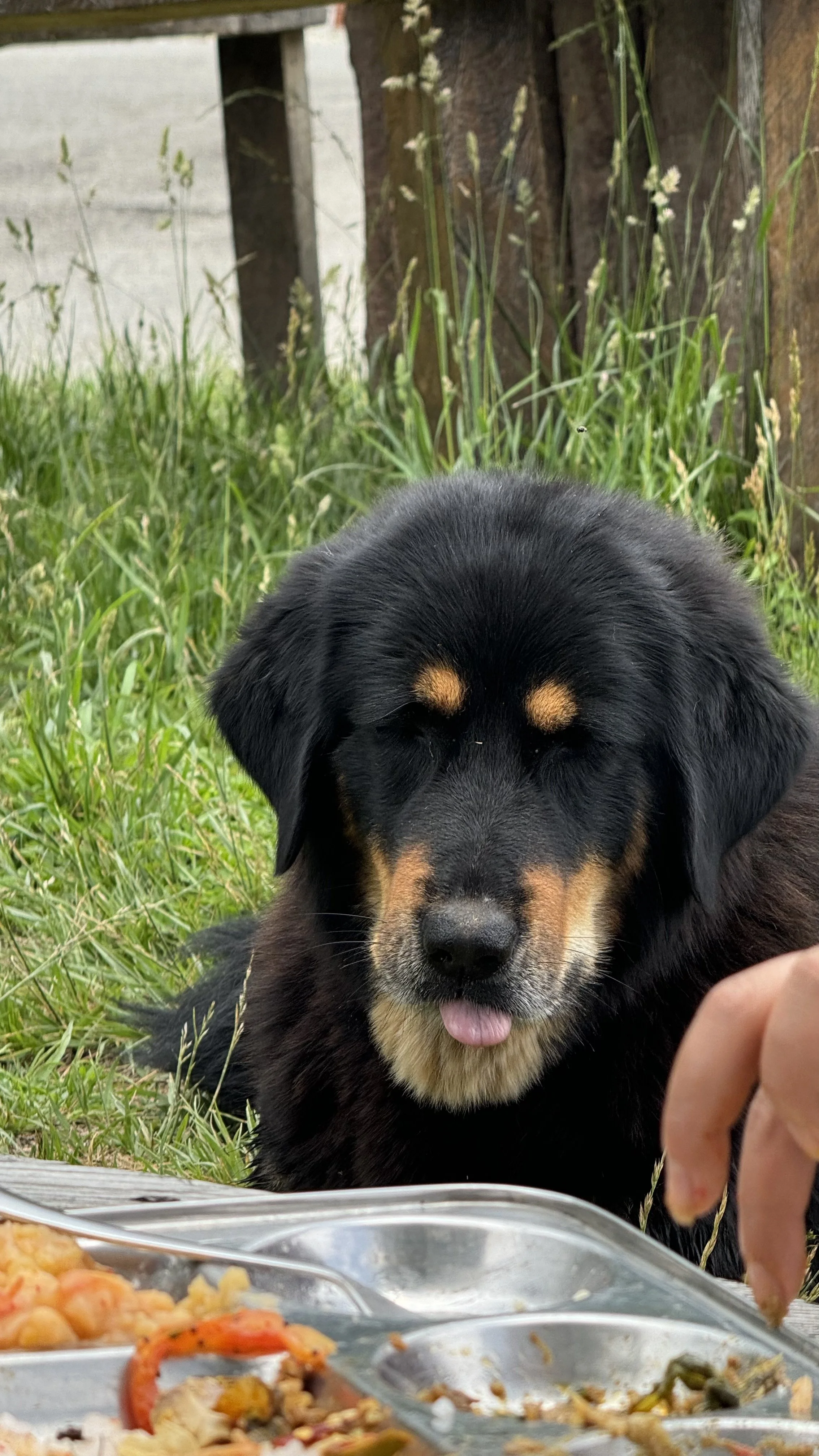


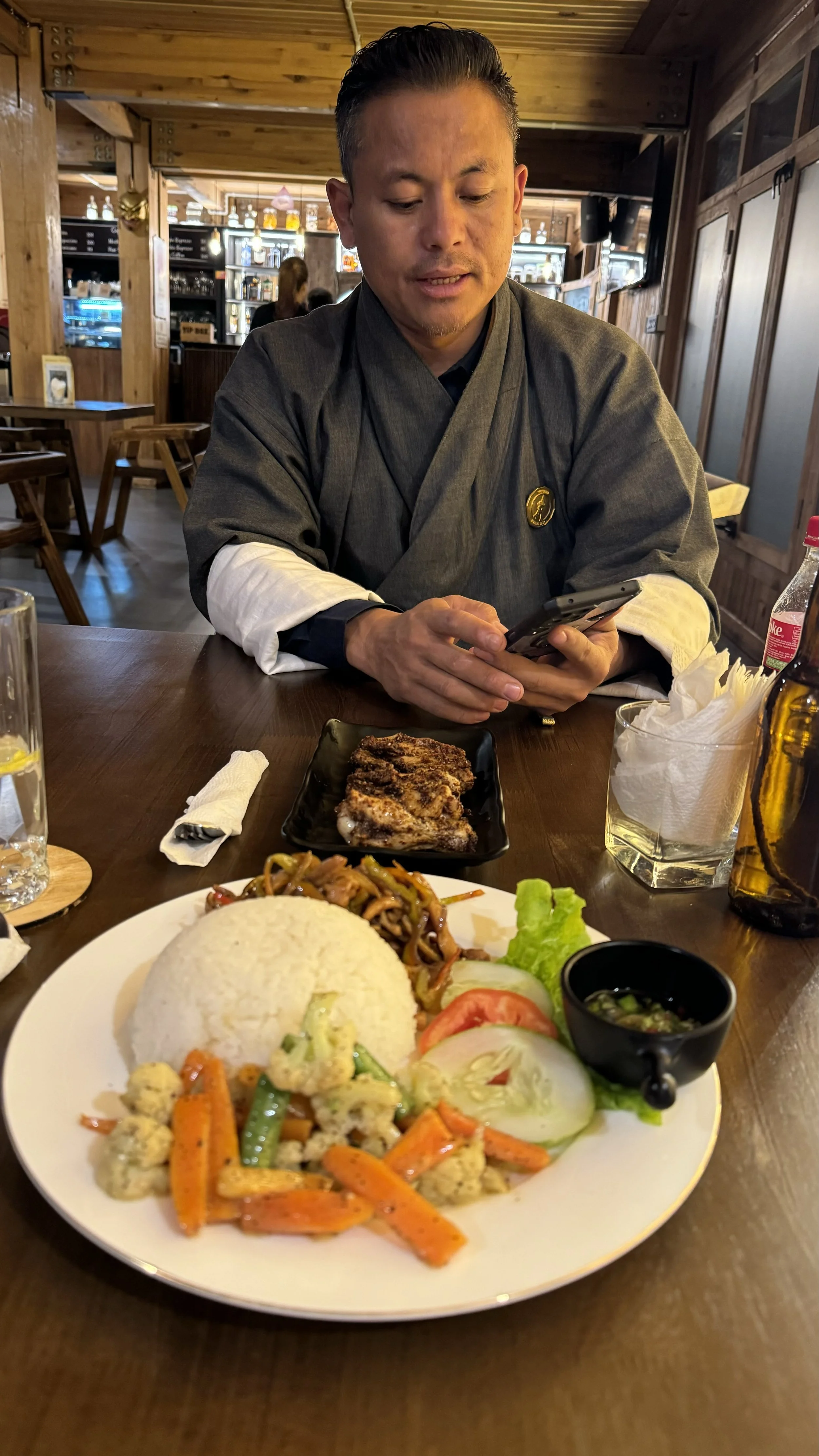
Thimphu, for example, is not quite the remote Himalayan capital people imagine. It is growing, building, changing. There is traffic. There is construction. There are young people dreaming of Australia, opportunity and a wider world.
That is the Bhutan people do not always picture. People complain about the weather. They get annoyed when someone cuts them up on the road. They sing and dance at parties. They worry about work, family, money, change. They are proud of where they come from, but they are not living inside a postcard for our benefit.
And somehow, that made us love it more.
Because the magic of Bhutan is not that it is untouched by real life. It is that real life there often has another layer. Buddhism is part of that. Not in a performative way, but as a rhythm beneath things. A way of thinking about action, reaction, consequence and patience. In the West, we are very good at reacting quickly. Bhutan often seemed to ask: what if you waited a moment?
A friend once described it as black and white marbles. Black for bad, white for good. A way of thinking about the balance of your actions through life. I am sure I am simplifying it terribly, but the idea stayed with me.
Not because it needs to become a grand moral lesson. More because you could feel how that kind of thinking shaped people.
A desire to do good. To be considered. To be centred.
Hospitality in Bhutan had that same quietness.
It was not always instantly polished in the way luxury travellers might expect. Bhutanese staff could be shy at first, sometimes reserved, sometimes very focused on doing things properly. But once the door opened, something much warmer appeared.
Generosity. Sincerity. Humour. Pride.
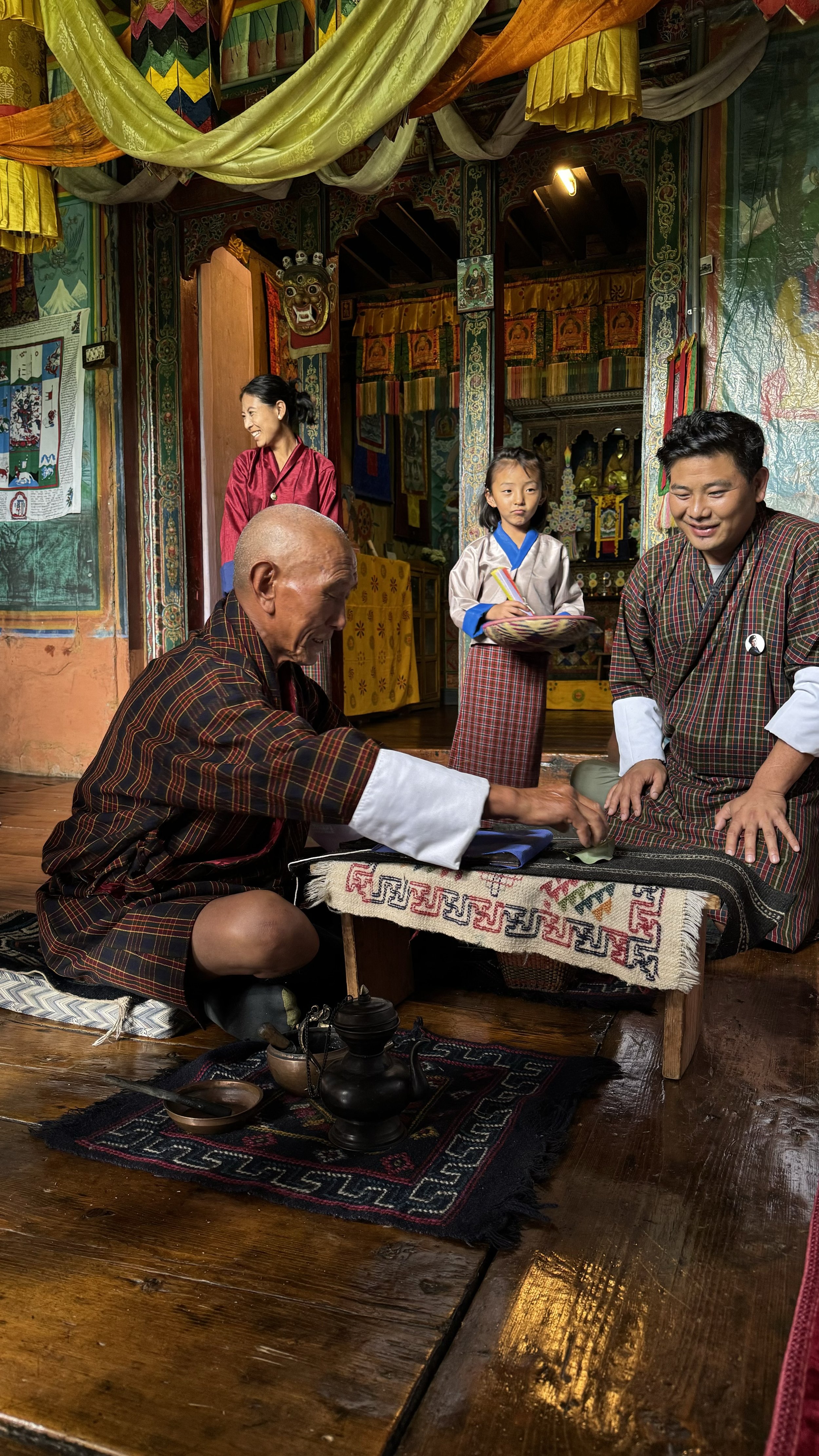
People would invite you into their homes, feed you, pour drinks, laugh with you. Tourism did not feel purely transactional. It did not feel like everyone had already learned to see visitors as a dollar sign.

A prayer flag making experience with a Bhutanese family who crafts for the Royal Family
“Coming from a world of highly polished luxury hospitality, this was especially powerful. Bhutanese hospitality felt hyper-local. Less perfected, perhaps, but often more personal.
Hosted, not served.”
One of the moments that stayed with him most was breakfast with the monks. Sitting with them, talking, becoming briefly part of their morning routine. Nothing overproduced. Nothing trying too hard. Just a quiet, sincere moment that somehow said more than a perfectly staged experience ever could.
That is the thing about Bhutan. It is visually beautiful, obviously. But the beauty that lasts is often emotional.
For us, Gangtey held a lot of that feeling. It is easier there to understand the Bhutan people imagine before they arrive. Open valleys, walking trails, a slower pace, black-necked cranes migrating through the landscape. It feels spacious and grounded, with room to wander and breathe. After Thimphu, with all its movement and change, Gangtey felt like a reminder of the stillness that first drew people to Bhutan.
But even then, it is not frozen in time. That is what people misunderstand.
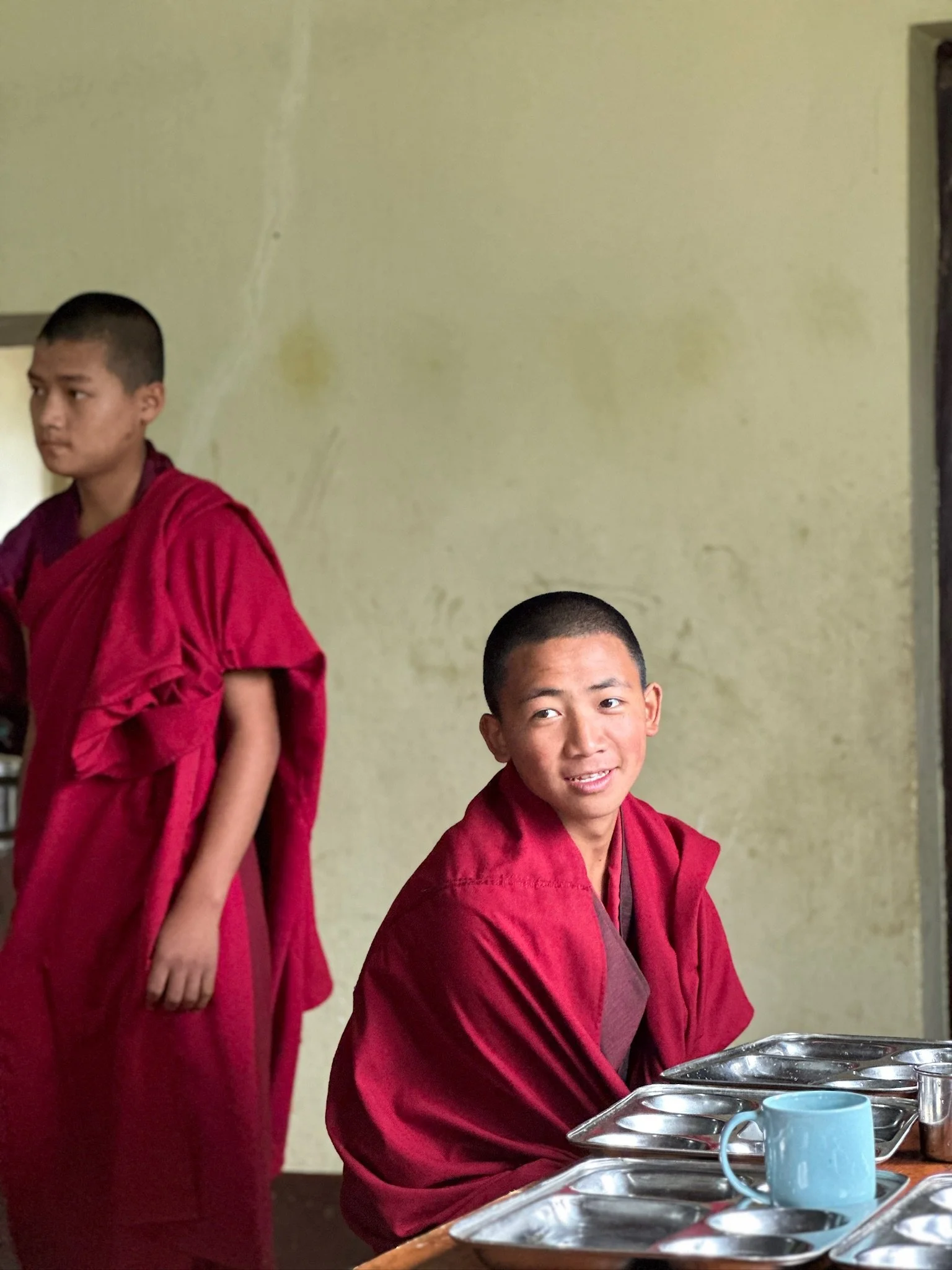
A quiet morning sharing breakfast with monks in Bhutan
Bhutan is not a museum. It is not a fantasy kingdom preserved for travellers who want the modern world held at arm’s length. It is a real country, deeply proud of its identity, but also evolving, questioning, stretching and adapting.
And then there is the happiness thing.
Eventually, when you tell people you lived in Bhutan, someone will mention it.
“The happiest place on earth.” It is almost unavoidable.
The story is famous: Gross National Happiness, born from the idea that Bhutan would not measure progress purely through profit. It is a beautiful concept, and there is something genuinely powerful about a country asking different questions about success.
But it is also one of the least complete ways to understand Bhutan.
Because happiness is not the same as simplicity. Culture is not the same as ease. Spirituality does not remove difficulty. And a country can be deeply special while still being full of pressure, ambition and contradiction.
That is not a criticism. If anything, it is the opposite.
The longer we spent in Bhutan, the less interested we became in the cliché. The more interesting story was the gap between the image and the truth. The picture and the place. The dream and the day-to-day. The lake on the wall and the yoghurt you cannot find in the shop.
Would we live there long term? Probably not. Are we glad we did it? Completely. Would we tell people to go? Absolutely.
Not because Bhutan is perfect. Not because it is the happiest place on earth. Not because it can be reduced to national dress, prayer flags, monasteries and mountain views. Go because it is one of the rare places that asks something of you.
It asks you to slow down. To look past the obvious beauty. To notice the people behind the polish. To understand that the most meaningful travel often happens in the space between what you expected and what you actually found. I first fell in love with Bhutan as an image. Years later, with Wahyu, I got to know it as a place.
And somewhere between the two sits the reason it still has such a hold on us.
Matt on the Snowman Trek in 2018 — one for the memory books.